Which river cruise is best for first timers?
How to choose a first Budapest river cruise: the shortest and least expensive featured options, what you see from the boat, and when to add a dinner cruise.
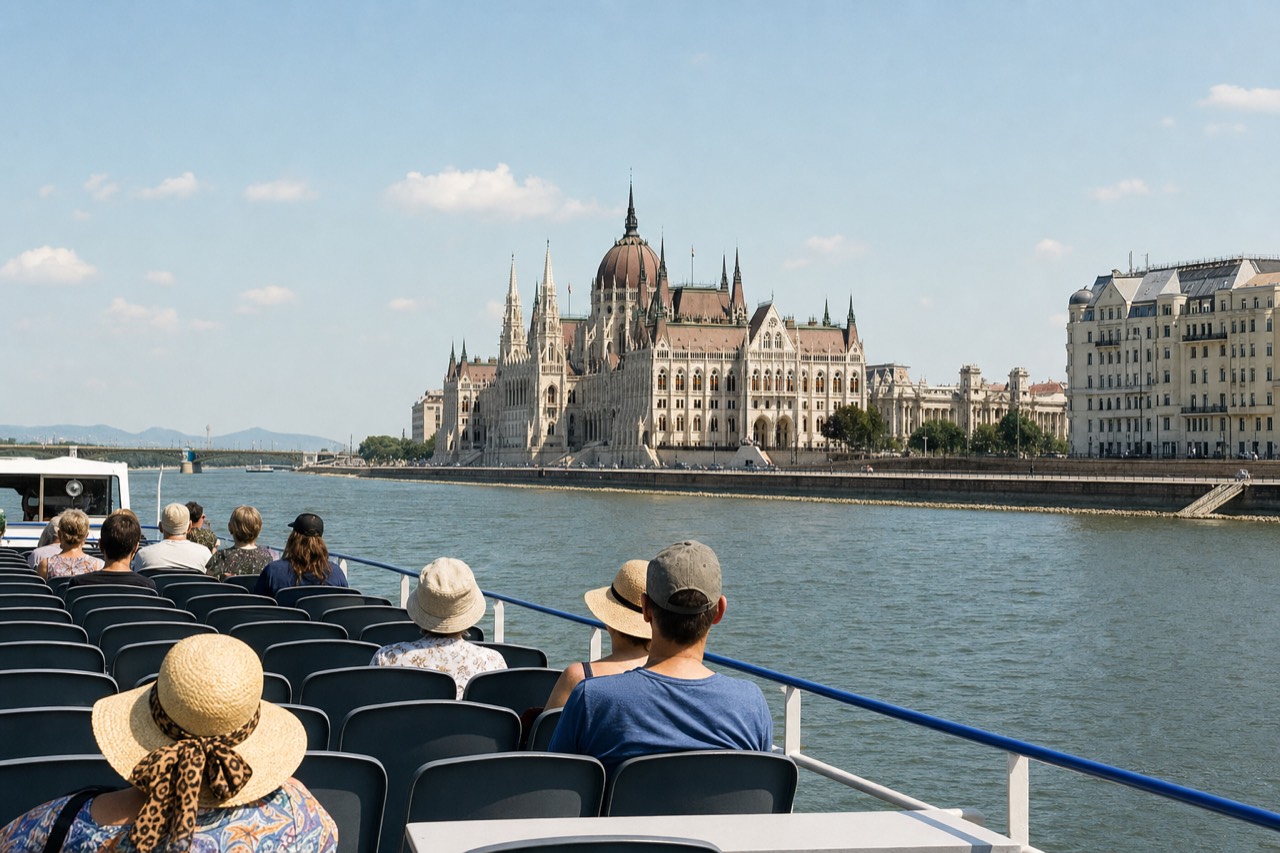
Which river cruise is best for first timers?
For a first visit, the lowest-risk booking is a short sightseeing cruise: the Budapest By Night Sightseeing Cruise runs about 50 minutes (checked September 2026), and the Official Sightseeing Cruise on the Danube starts from $22 per person (checked September 2026). Both show the full riverside skyline without a dinner commitment.
The featured Budapest cruises span a wide range, from a 50-minute loop to a 2 hour 30 minute candlelit dinner. That spread is good news for a first timer. You do not have to gamble an evening and a dinner budget on whether you like being on the river; you can spend less than the cost of a mid-range restaurant meal and find out.
The night sightseeing cruise is the pick for most first visits. It is the shortest featured option. Drinks cost extra, and the audio guide is currently unavailable; choose a departure after sunset if city lights are your priority, though illumination is not guaranteed. The listing currently shows a 5.0 rating with too few reviews to quote a reliable count (checked September 2026), and the price is on the operator's live listing rather than printed here.
If you would rather test the water in daylight at the lowest featured price, the Official Sightseeing Cruise on the Danube starts from $22 per person (checked September 2026) and runs about 90 minutes on the historic Gróf Széchenyi ship. The comparison pages across Budapest River Cruises break these options down family by family, but the short version is simple: start small, then upgrade if the river wins you over.
How short is the shortest river cruise in Budapest?
The shortest featured option is the Budapest By Night Sightseeing Cruise at about 50 minutes (checked September 2026). The longest, the candlelit dinner cruise, runs 2 hours 30 minutes. Most sightseeing departures sit between one and one and a half hours, which is why a short cruise is the standard first-timer choice.
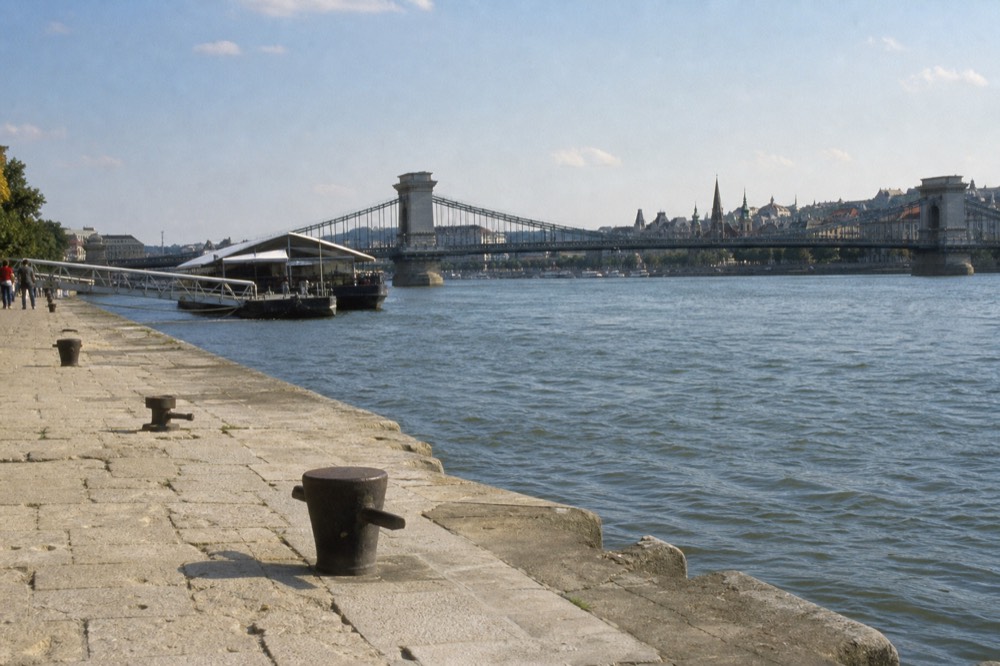
Duration is the single best filter for a first booking. A 50-minute loop covers the same World Heritage riverfront as a 2 hour 30 minute dinner: the Parliament, Castle Hill, the bridges and the Margaret Island stretch all sit on the standard sightseeing route between the docks. What changes with time is not the skyline, it is what happens on board, from a welcome drink to a four-course meal.
Durations below are as listed by each operator (checked September 2026):
| Cruise | Format | Duration |
|---|---|---|
| Budapest By Night Sightseeing Cruise | Night sightseeing | About 50 minutes |
| Budapest Paddle Steamer Danube Cruise with Tokaj Wine and Audio Guide | Sightseeing with wine | About 1 hour |
| Official Sightseeing Cruise on the Danube | Sightseeing with live music | About 90 minutes |
| Unlimited Prosecco, Beer, Aperol and Limoncello Spritz Cruise (operated by Duna-Weser Kft.) | Drinks sightseeing | 75 minutes |
| Unlimited Prosecco, Beer, Aperol and Limoncello Spritz Cruise (Viator listing, Duna-Weser Kft.) | Drinks sightseeing | About 1 hour 15 minutes |
| Budapest Danube Cruise with Dinner Options, Live Music and Dance | Dinner cruise | About 1 hour 30 minutes |
| Danube Cruise with Goulash and Lángos or Dessert | Light meal with music | 90 minutes |
| Budapest Danube River Candlelit Dinner Cruise with Live Music | Dinner cruise | 2 hours 30 minutes |
The 50-minute night cruise earns its place as the default first booking on two grounds. First, it is the shortest commitment on the roster, so a cold night or a restless companion costs you less than an hour. Second, an after-dark departure can show the illuminated riverfront, although the city controls landmark lighting and illumination is not guaranteed. The deeper duration breakdown, including how the dinner options compare hour by hour, sits in the guide to how long Budapest river cruises last.
What does a first Budapest cruise cost?
The least expensive featured cruise is the Official Sightseeing Cruise on the Danube, from $22 per person (checked September 2026). The unlimited spritz cruises both start from $29 per person (checked September 2026). Dinner cruises carry their price on the operator's live listing rather than a printed figure here.
Price tracks format more than quality on this river. Sightseeing loops sit at the bottom of the range, drinks cruises add a modest premium, and dinner cruises sit above both because you are buying a meal and live music along with the view. The figures below are the starting prices on file (checked September 2026):
| Cruise | Starting price | Reviews on file |
|---|---|---|
| Official Sightseeing Cruise on the Danube | From $22 per person | 632 reviews, no star rating on file |
| Unlimited Spritz Cruise (Duna-Weser Kft.) | From $29 per person (checked September 2026) | 48,175 reviews, no star rating on file |
| Unlimited Spritz Cruise (Viator listing, Duna-Weser Kft.) | From $29 per person | Rated 4.6 across 3,705 reviews (checked September 2026) |
| Budapest By Night Sightseeing Cruise | On the listing | 5.0 shown, too few reviews to state |
| Budapest Danube Cruise with Dinner Options, Live Music and Dance | From $58 per person (checked September 2026) | Rated 4.7 across 7,557 reviews |
| Danube Cruise with Goulash and Lángos or Dessert | On the listing | 2,406 reviews, no star rating on file |
| Budapest Danube River Candlelit Dinner Cruise with Live Music | On the listing | Rated 4.7 across 1,979 reviews (checked September 2026) |
Two practical notes for a first booking. Starting prices are per person and refer to the base ticket; drinks packages and dinner seatings cost more, and the exact current figure is always on the live listing. And if your travel dates are not fixed, it pays to check availability on a couple of different evenings, to find a departure that fits your itinerary.
What will you actually see from the boat?
A first cruise on the Danube passes the Hungarian Parliament Building, the Chain Bridge, Fisherman's Bastion on Castle Hill, the Citadella on Gellért Hill, Liberty Bridge, the Shoes on the Danube Bank memorial and Margaret Island. Ten bridges cross the river within Budapest, so a single loop crosses most of the World Heritage riverfront.
The headline sight is the Hungarian Parliament Building on the Pest bank, a Gothic Revival design by architect Imre Steindl built between 1885 and 1904 and lit at night by an extensive illumination system, as its documented history records. Opposite it, Castle Hill carries the Neo-Romanesque terraces of Fisherman's Bastion, designed and built by Frigyes Schulek between 1895 and 1902, with seven towers for the seven Magyar tribes that settled the Carpathian Basin.
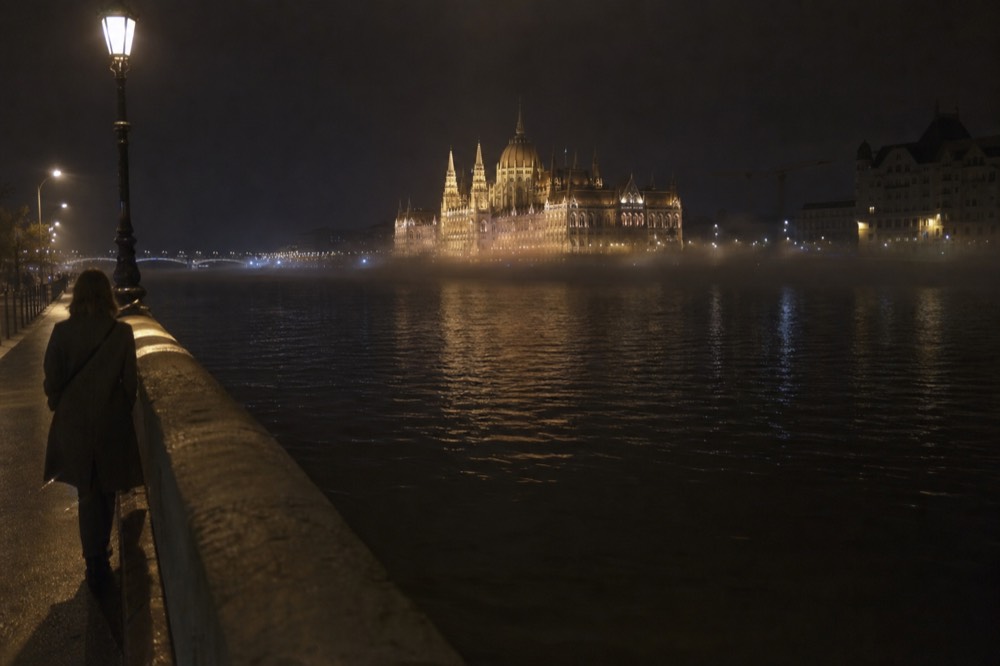
The oldest crossing you pass under is the Széchenyi Chain Bridge, the first permanent bridge across the Danube in Budapest, which opened on November 20, 1849 to a design by English engineer William Tierney Clark, built under the local supervision of Scottish engineer Adam Clark. Further south, Liberty Bridge opened on October 4, 1896 and wears the bottle-green paint restored in 1984.
Not every landmark is festive. The Shoes on the Danube Bank memorial, installed on the Pest embankment on April 16, 2005, is sixty pairs of cast-iron period shoes by film director Can Togay and sculptor Gyula Pauer, commemorating the mostly Jewish victims shot into the river by Arrow Cross militiamen in 1944-45. Boats pass it slowly, and most audio guides mark it. North of the Chain Bridge, Margaret Island appears between Margaret Bridge and Árpád Bridge, its parks and music fountain visible from the water.
Day or night for a first cruise?
Daytime departures run roughly hourly through the afternoon and show the riverfront in natural light. Night departures are timed to the illuminated Parliament, Buda Castle and bridges. For a first cruise, night offers the strongest single impression, since Budapest's riverside lighting is the reason most visitors book at all.
Daylight suits photographers and anyone who wants to read the city's geography: which bank is Buda, where the hills start, how the bridges connect. The light is best in the late afternoon, and daytime departures are usually the easiest to fit around other sightseeing because they run so frequently.
Night is the stronger first impression. The Parliament's lighting system was built for exactly this view from the water, and the bridges and Castle Hill follow it after dark. A first-timer with one evening free gets more from a 50-minute night loop than from an hour in daylight, which is why the night sightseeing cruise leads the recommendations here. For how the seasons change the calculation, from summer sunset timings to winter cabin heating, see the guide to the best time of year for a Danube cruise.
Where do the boats leave from?
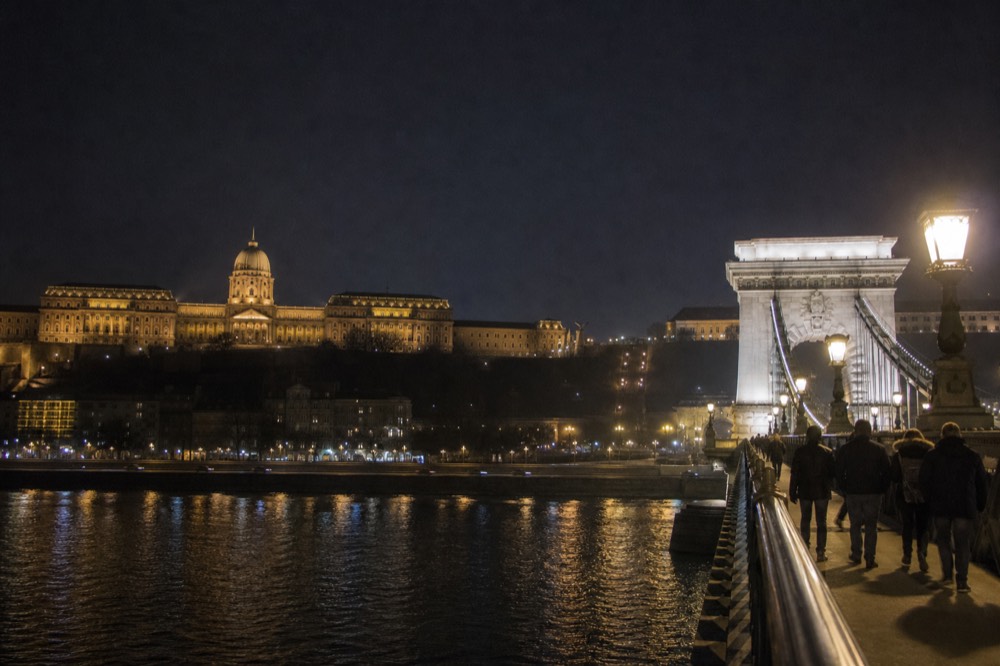
Most sightseeing boats board from numbered docks on Jane Haining rakpart on the Pest embankment, with Mahart PassNave using Dock 5 at Vigadó tér and a dock at Batthyány tér on the Buda side. Operators advise arriving 15 to 20 minutes before departure, because boats leave on a fixed schedule.
The dock system is simpler than it looks from a map. On the Pest embankment, Jane Haining rakpart carries numbered docks 6, 7, 10 and 11, used by several operators: Legenda boards from Dock 7 and Duna Cruises from Dock 10. Mahart PassNave, Hungary's largest passenger shipping company, runs from Dock 5 at Vigadó tér and also boards on the Buda side at Batthyány tér. The MAHART night sightseeing cruise boards at Vigadó Dock 5 on Pest or Batthyány Dock 1 on Buda, depending on the selected option; the exact address is on the live listing, and tram and metro connections to each departure point are documented separately.
The single most useful habit is checking the dock number the morning you sail. Boats leave on a fixed schedule, and the 15 to 20 minute early arrival operators advise is not padding: check-in, boarding and finding a spot on the open deck all happen in that window. The full dock-by-dock breakdown is in the guide to where Budapest cruises board along the Danube.
Should your first cruise be a dinner cruise?
A short sightseeing cruise is the better first booking, with dinner cruises as a second visit once you know the river suits you. Dinner options run from about 1 hour 30 minutes to 2 hours 30 minutes and cost more than sightseeing, so they reward a confirmed liking for the format.
The dinner tier is genuinely good, it is simply a bigger bet. The Budapest Danube Cruise with Dinner Options, Live Music and Dance is rated 4.7 across 7,557 reviews and starts from $58 per person (checked September 2026), running about 1 hour 30 minutes with live music and option-dependent entertainment. It is the most-reviewed featured dinner option and a reasonable first dinner cruise if you already know you want one.
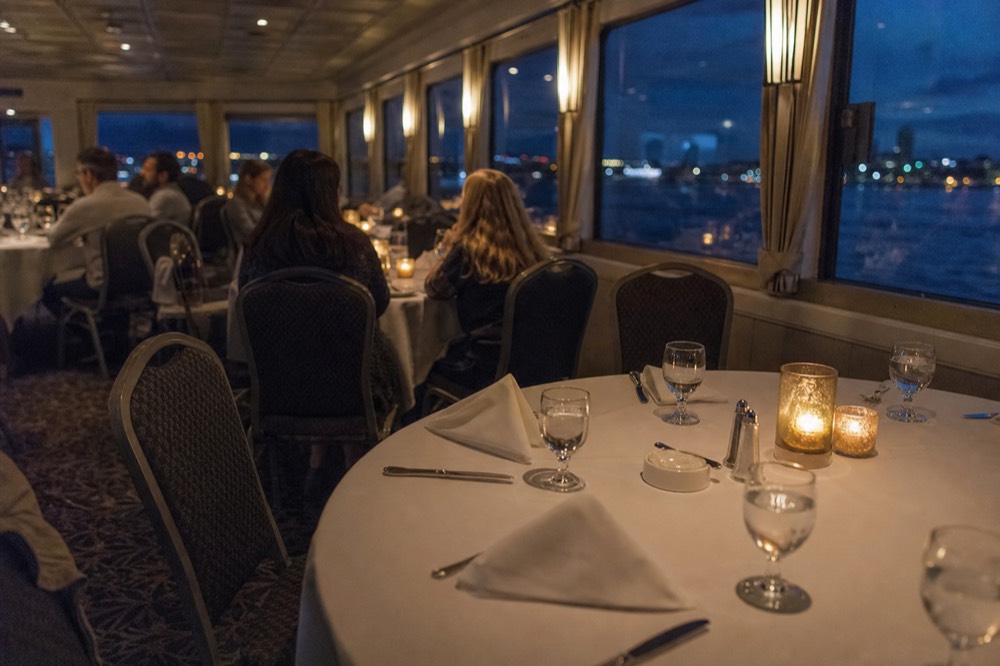
The alternatives split by mood. The Danube Cruise with Goulash and Lángos or Dessert, operated by Hungaria Koncert Ltd., runs 90 minutes with goulash and a choice of lángos or dessert, plus live music on a historic ship, carries 2,406 reviews on file with no star rating on file, and prices on the listing (checked September 2026). The candlelit dinner cruise, operated by Legenda Cruises from Dock 7 on Jane Haining rakpart, is the longest and most formal option at 2 hours 30 minutes, rated 4.7 across 1,979 reviews, with a four-course meal and the price on the listing (checked September 2026).
One accessibility note that matters for planning: the candlelit dinner cruise, the Hungarian dinner cruise and the official sightseeing cruise are all listed as not suitable for wheelchair users. If anyone in your group uses a wheelchair, check the operator's listing directly before booking any of the featured options.
What if the weather turns or your plans change?
Budapest sightseeing cruises run year-round, with heated indoor cabins for winter departures, and the Danube rarely freezes solid enough to stop operations. Open-air decks on some boats are subject to weather, with indoor lounges as backup. Where a specific listing's weather policy is not on file, conditions are on the operator's live listing.
Winter is not the dealbreaker first timers assume. The river rarely freezes solid enough to halt cruise operations in Budapest, and modern boats carry heated indoor cabin areas, so a December night cruise is a normal booking rather than an act of faith. Summer has the opposite problem: open decks fill up on hot evenings, so an early spot at the rail is worth the early arrival.
For the unlimited spritz cruise operated by Duna-Weser Kft., the listing notes that open-air viewing areas are subject to weather with an indoor lounge available. For the night sightseeing cruise, the paddle steamer cruise and the dinner cruises, no verified weather-behavior note exists on file, so treat the operator's live listing as the source for what happens in rain. Before booking, read the cancellation terms on the listing itself; policies differ by operator and ticket type, and this site does not quote them.
What do first timers most often get wrong?
The most common first-timer mistakes are booking the wrong dock, arriving at the departure minute rather than 15 to 20 minutes early, and expecting a full meal on a drinks or sightseeing cruise. Checking the exact dock address on the live listing before leaving the hotel prevents nearly all of them.
The meal expectation deserves a line of its own. A welcome drink is a drink, not dinner, and an unlimited spritz cruise is exactly what it says: drinks plus the same sightseeing loop. Travellers who book a 50-minute cruise and then review it for lacking food have bought the wrong product, not a bad one.
The other recurring confusion is operator identity. Riverride is a real Budapest tour company, but it runs amphibious buses that drive on land before a short Danube segment, not a boat cruise. Riverside Cruises is also real, but it runs multi-day luxury Danube itineraries that pass through Budapest as one stop, a different product from the local sightseeing and dinner boats featured here. Neither belongs in a first-timer's shortlist of local cruises, and both explain why searches for "Budapest river cruise" return such mixed results.
The questions first timers ask most often come down to four things: which cruise to book first, how long and how much it costs, and whether dinner belongs in the plan. The short answers repeat the core advice of this guide, which is to start with the 50-minute night sightseeing cruise or the $22 official sightseeing cruise, then add a dinner cruise on a later visit if the river wins you over. (checked September 2026)
Common questions about first-time river cruises in Budapest
Which river cruise is best for first timers?
A short sightseeing cruise is the best first booking. The Budapest By Night Sightseeing Cruise runs about 50 minutes (checked September 2026), and the Official Sightseeing Cruise on the Danube starts from $22 per person (checked September 2026). Both cover the full riverside skyline without a dinner commitment, so you can test the format cheaply and upgrade later.
How short is the shortest Budapest river cruise?
The shortest featured option is the Budapest By Night Sightseeing Cruise at about 50 minutes (checked September 2026). The longest featured option, the candlelit dinner cruise, runs 2 hours 30 minutes. Most sightseeing departures fall between one and one and a half hours.
What does a first Budapest cruise cost?
The least expensive featured cruise is the Official Sightseeing Cruise on the Danube, from $22 per person (checked September 2026). The unlimited spritz cruises both start from $29 per person (checked September 2026). Dinner cruises carry their current price on the operator's live listing, with the dinner-and-dance option starting from $58 per person (checked September 2026).
Should your first cruise be a dinner cruise?
Not usually. Dinner cruises run from about 1 hour 30 minutes to 2 hours 30 minutes and cost more than sightseeing, so they suit a second visit once you know the river works for you. If you already know you want dinner with the view, the most-reviewed featured option is rated 4.7 across 7,557 reviews and starts from $58 per person (checked September 2026).
Where do the boats leave from?
Most board from numbered docks on Jane Haining rakpart on the Pest embankment, including Dock 7 for Legenda and Dock 10 for Duna Cruises. Mahart PassNave uses Dock 5 at Vigadó tér and a dock at Batthyány tér on the Buda side. Arrive 15 to 20 minutes early, since boats leave on a fixed schedule.
Editorial starting point; no preferences entered
Budapest Paddle Steamer Danube Cruise with Tokaj & Audio Guide
Settle the sightseeing part of your day: check the cruise date and boarding details before arranging dinner or onward plans.
One hour, Duna Dock 10 on Pest. English audio via your own earphones, plus a Tokaj Frizzante or orange juice. No meal. Not wheelchair accessible.
Compare Options And Tailor This Choice
Start with what you know. Travel time to the meeting point is extra unless transport is explicitly included.
Age And Access Requirements
Alcohol service is for adults. Children must travel with an adult. Ask the operator about individual access needs; a blank preference is not an access assessment.
English audio via your own earphones, plus a Tokaj Frizzante or orange juice
One hour, Duna Dock 10 on Pest. English audio via your own earphones, plus a Tokaj Frizzante or orange juice. No meal. Not wheelchair accessible.
Sightseeing and live music; food and drinks cost extra
90 minutes, Akadémia Dock 2 on Pest. Sightseeing and live music; food and drinks cost extra. Not wheelchair accessible.
Live music and dance; choose buffet, Wine & Dine or the listed lighter meal option
90 minutes, Akadémia Dock 2 on Pest. Meal and entertainment depend on the package: compare the served-dinner or Wine & Dine options; the lighter goulash option excludes folklore. Extra drinks may cost more. Not wheelchair accessible.
Compare Your Actual Trip Costs
Use totals for the same party in one currency. Include travel to the meeting point, drinks and food in your independent total.
None of these experiences fits those choices. Adjust a filter or reset to see the starting options.
Published departure schedule. Seats and final price are confirmed on Viator.
We may earn a commission from affiliate bookings, at no extra cost to you. The provider confirms dates, final prices and options.