Budapest Night River Cruise Guide: Evening, Sunset & Night Departures Compared
Budapest after dark is a city transformed, and the Danube becomes a front-row seat to one of Europe's most spectacular light shows. This guide compares evening, sunset and night river cruises so you can pick the right departure and see the Hungarian capital at its most magical.
Short answer
The best Budapest night river cruise depends on what you want: a short sightseeing cruise to see the illuminated landmarks, a dinner cruise with live music, or an unlimited drinks party boat. Evening departures catch the sunset, while night cruises after dark show the Parliament, Buda Castle and bridges fully lit. The featured cruises run 50 minutes to 2 hours 30 minutes and cost from $29 for a drinks cruise to around $58 for a dinner cruise (checked September 2026).
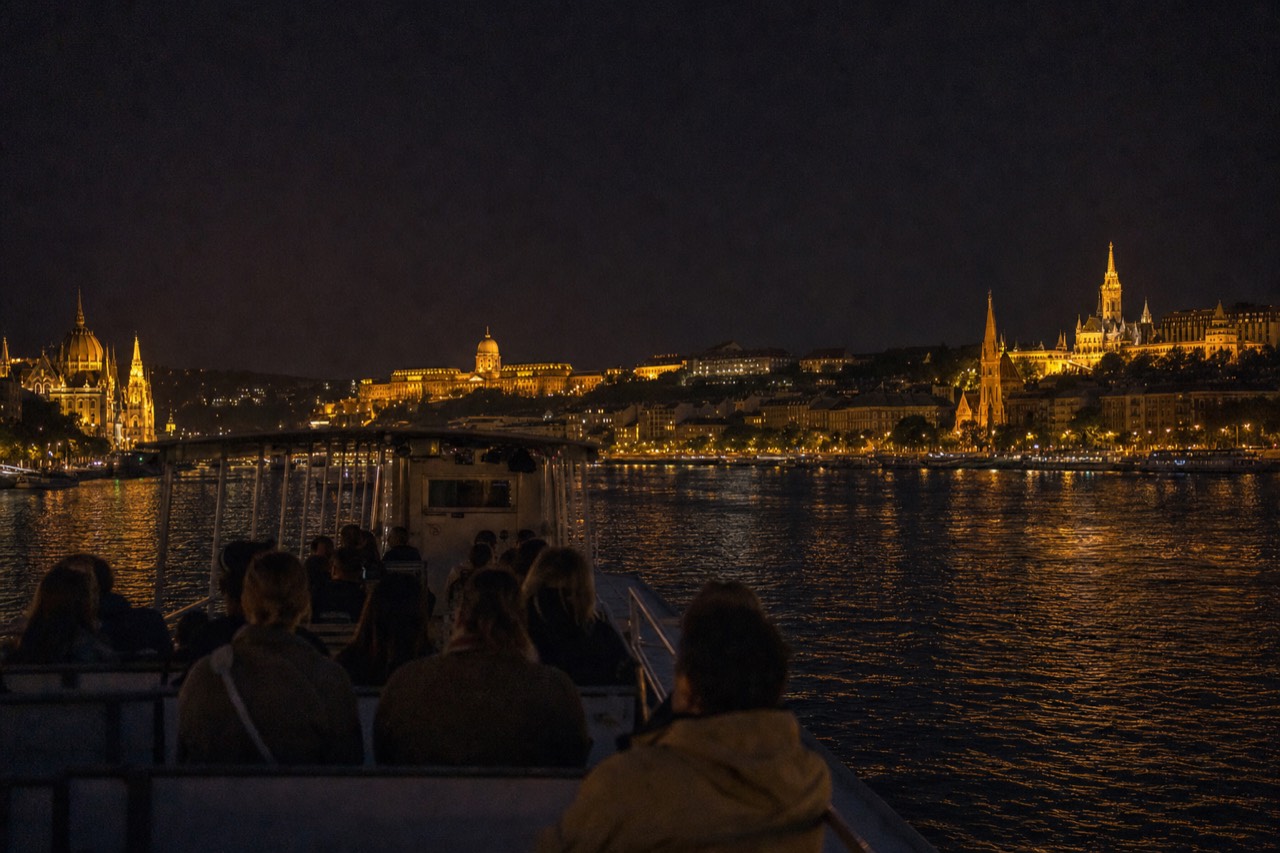
When the sun goes down, the Hungarian capital flips a switch. The Danube turns into a mirror for floodlit bridges, a glowing Parliament building and the hilltop Buda Castle, and a Budapest River Cruises night departure puts you right in the middle of it. Whether you want a quick 50-minute sightseeing loop, a candlelit dinner with live music or a lively prosecco boat, there is a night cruise that fits.
What is a Budapest night river cruise like?
A Budapest night river cruise is a boat trip after sunset that showcases the city's illuminated landmarks: the Parliament, Buda Castle, Chain Bridge, and Gellért Hill. Boats range from open-air sightseeing vessels to glass-enclosed dinner boats, and most last 50 minutes to 2 hours 30 minutes. A drink or meal is often included, and the atmosphere shifts from relaxed sightseeing to lively dinner-and-music evenings (checked September 2026).
The experience changes with the season. In summer, sunset can be as late as 8:30 PM, so an evening departure might still catch the golden hour before the lights come on. In winter, darkness falls by 4:30 PM, and the illuminated landmarks stand out against a deeper night sky. Heated indoor cabins keep things comfortable year-round, and the Danube rarely freezes solid enough to stop operations.
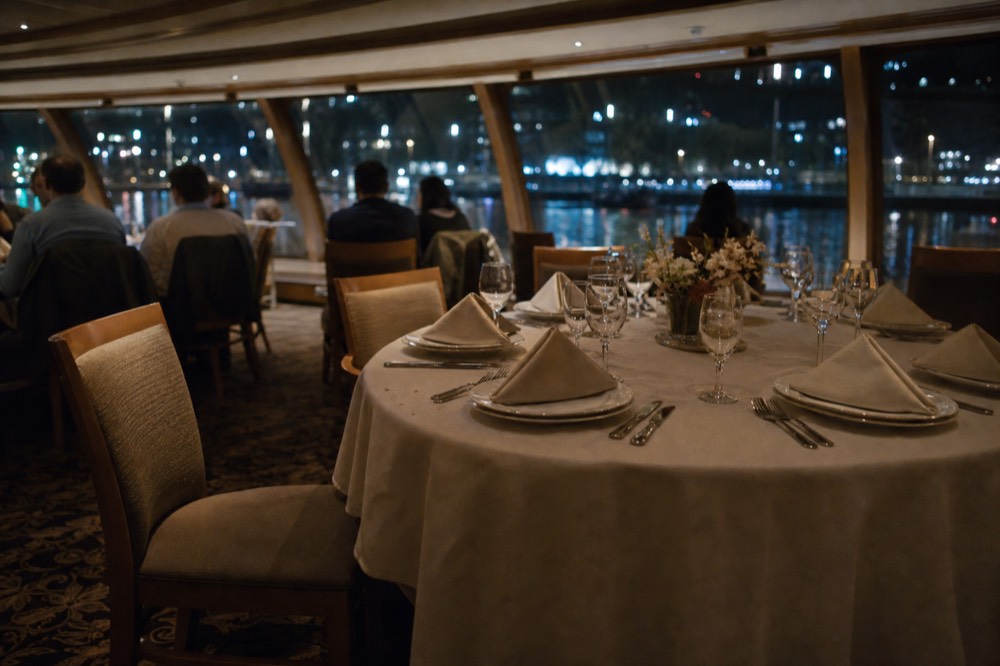
On every night cruise you will see the same core landmarks, but the angle and the pace vary. A short 50-minute loop stays in the central stretch between Margaret Bridge and Rákóczi Bridge, while longer dinner cruises may go further north or south. Live commentary is rare on night boats; the view does the talking. Some operators hand out a complimentary welcome drink, others run an open bar, and the dinner cruises serve multi-course meals with Hungarian folk music or international hits.
Which night cruises are available in Budapest?
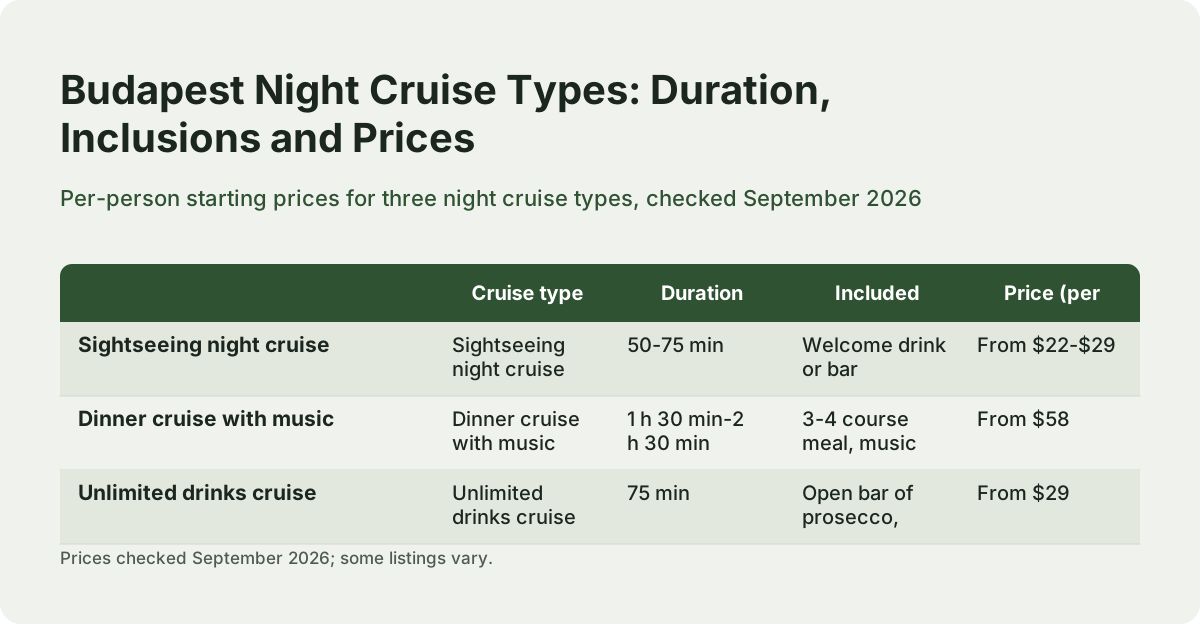
Budapest offers three main types of night cruise: short sightseeing trips (50–75 minutes), with drinks included only on specified products, dinner cruises (1 hour 30 minutes to 2 hours 30 minutes) with live music and a plated meal, and sunset or evening departures that bridge the daylight-to-darkness transition. Prices start from $22 for a basic sightseeing ticket, climb to around $29 for drinks-inclusive options, and reach $58 and up for dinner cruises (checked September 2026).
The table below lines up the key differences so you can see what each style delivers after dark.
| Cruise type | Typical duration | What's included | Price range (per person, checked Sept 2026) | Best for |
|---|---|---|---|---|
| Sightseeing night cruise | 50–75 min | Panoramic views; drinks depend on the chosen product | Check the selected listing | First-time visitors, quick city lights tour |
| Dinner cruise with music | 1 h 30 min–2 h 30 min | 3–4 course meal, live music, sometimes a welcome drink | From $58 (checked September 2026) (some listings vary) | Couples, celebrations, a relaxed evening |
| Unlimited drinks cruise | 75 min | Open bar of prosecco, beer, Aperol spritz, limoncello spritz | From $29 (checked September 2026) | Groups, party atmosphere, budget-friendly social cruise |
These formats cover the spread from a short night sightseeing loop to a dinner-and-show evening.
How do evening, sunset and night cruises compare?
Evening cruises depart while there is still daylight or during sunset, so you see landmarks in natural light and then watch the illumination appear. Sunset cruises are timed to the golden hour and the first switch-on of the city lights. Night cruises leave after full darkness and are designed purely for the illuminated skyline. Daytime boats run hourly through the afternoon, while night departures catch the Parliament, Buda Castle and bridges at their most dramatic (checked September 2026).
If you want that transition from day to night, book a departure that starts 30–45 minutes before sunset. In June that means boarding around 7:45 PM, while in December you would need a 3:30 PM sailing. The MAHART Budapest By Night Sightseeing Cruise (t69093) lasts about 50 minutes and excludes food and drinks. Its audio guide is under maintenance. Check the departure against sunset; boarding is Vigadó Dock 5 or Batthyány Dock 1 according to the option.
Because it is a short, no-frills loop, t69093 works well as an add-on after a day of sightseeing or before a late dinner. You get the essential illuminated panorama: Parliament, Chain Bridge, Buda Castle, Gellért Hill, all without committing to a full evening.
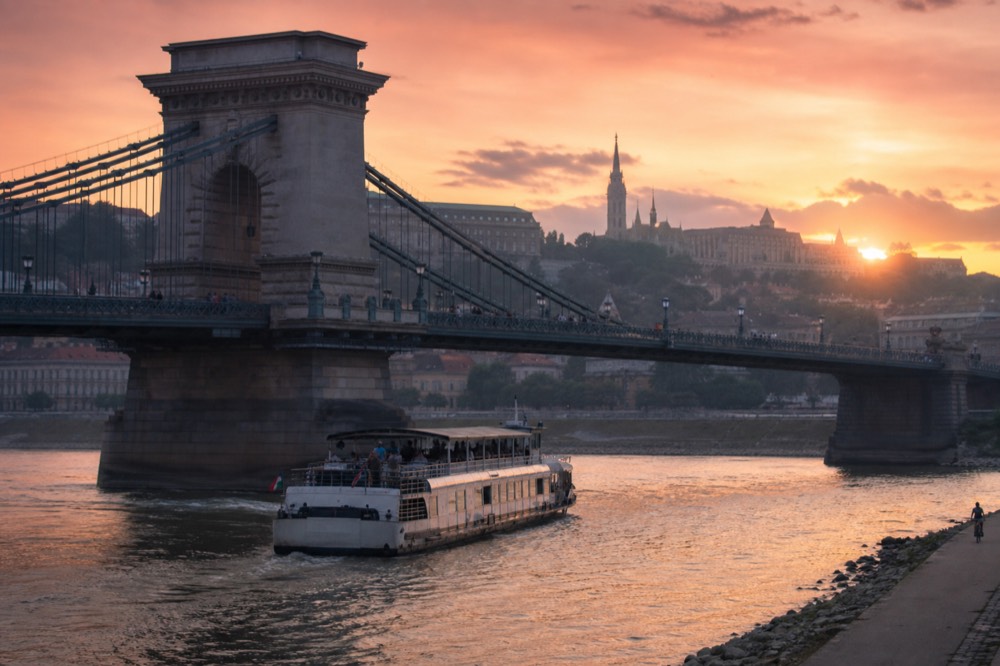
For a longer experience that starts in daylight and ends in darkness, look at the dinner cruises. They typically board around 7:00–7:30 PM in summer, so you are on the water for the sunset and the full illumination afterward.
What are the best dinner and drinks night cruises?
The top-rated dinner-and-drinks cruises on the Danube are the Budapest Danube Cruise with Dinner, Live Music and Dance, rated 4.7 (checked September 2026) stars with a 1.5-hour evening meal from $58, and the Unlimited Prosecco, Beer, Aperol and Limoncello Spritz Cruise, a 75-minute open-bar party boat rated 4.6 stars from $29.
The dinner cruise (d499-5808DINNER) runs about 1 hour 30 minutes and sells several meal and entertainment packages. Choose the option explicitly: the goulash package excludes folklore, while other packages include live music and dance performances. Confirm the boat facilities and selected dinner package for your departure.
The unlimited drinks cruise (d499-337865P1) is a different mood entirely. For a flat rate that starts at $29, (checked September 2026) you get a 75-minute sail with an open bar pouring prosecco, beer, Aperol spritz and limoncello spritz. The boat has both indoor lounge space and open-air viewing areas, though the open decks are subject to weather. It is a social, high-energy option best suited to groups and travellers who want a party on the water.
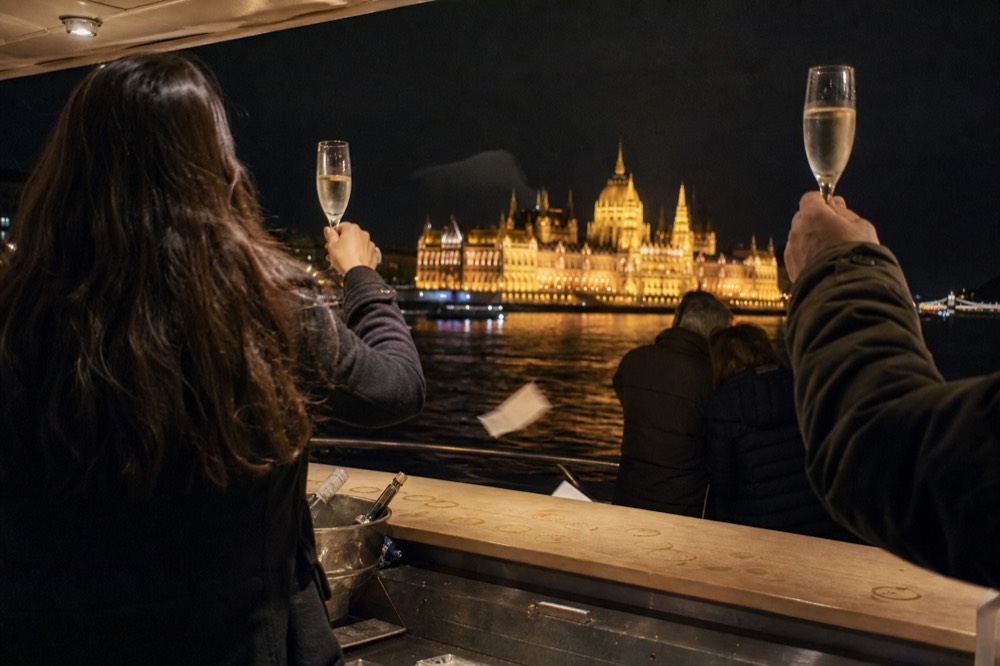
If you prefer a quieter, more romantic evening, the candlelit dinner cruises (such as d499-35015P4, a 2 hour 30 minute 4-course dinner with live music) sit at the top of the price range and are covered in detail in our Budapest dinner cruise guide. For a breakdown of ticket costs across all cruise types, see our Budapest river cruise tickets and prices guide.
How much do night cruises cost?
Night cruise prices are straightforward and tiered by what's included. The night sightseeing cruise shows its current price on the booking page; the dated starting prices are $29 for an unlimited-drinks cruise and $58 for a dinner cruise with live music (checked September 2026). Candlelit dinner cruises with multiple courses are priced on the operator's listing and tend to run higher. Children's tickets, where offered, are usually discounted, and some operators run early-bird online rates.
The table below shows the starting prices for the main night cruise types, based on the verified figures from the live listings.
| Cruise type | Example tour | Starting price (per person, checked Sept 2026) | What's included |
|---|---|---|---|
| Night sightseeing | t69093 (Budapest By Night) | On the listing | 50-min cruise; food and drinks not included |
| Unlimited drinks party cruise | d499-337865P1 (Prosecco & Spritz) | $29 (checked September 2026) | 75-min cruise, open bar |
| Dinner cruise with music | d499-5808DINNER (Dinner & Dance) | $58 | 1 h 30 min cruise, meal, live music |
| Candlelit dinner cruise | d499-35015P4 | On the listing | 2 h 30 min cruise, 4-course meal, live music |
Prices are per person and do not usually include hotel transfers or extra drinks beyond what's stated. Free cancellation and pay-later options are common, but always check the operator's live listing for the exact terms.
Which landmarks are illuminated at night?
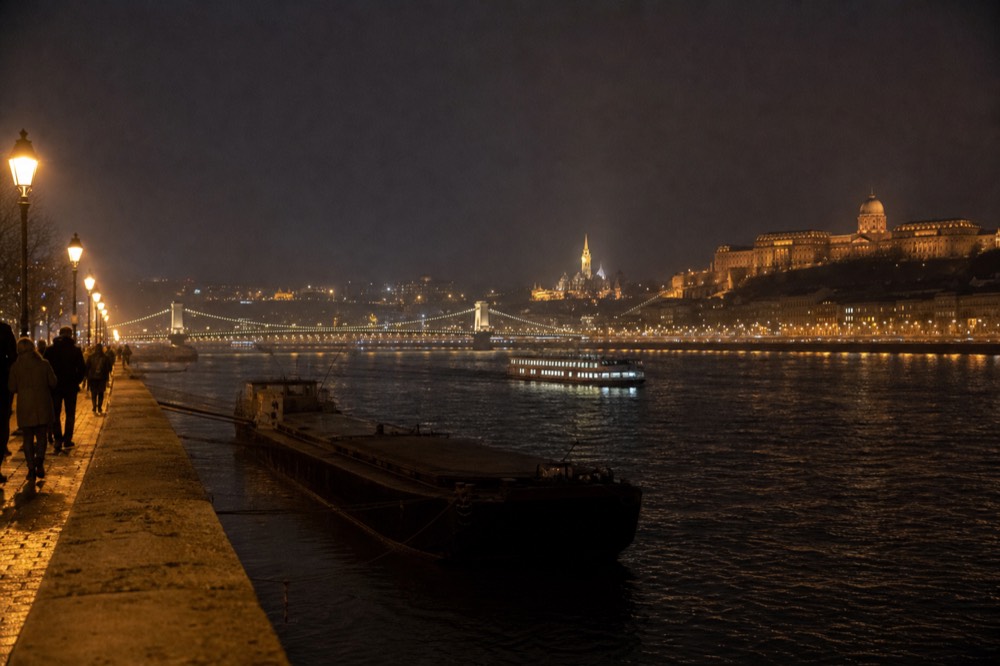
The Parliament, Buda Castle and Chain Bridge are the main sights to look for on a Budapest night cruise. Choose your departure for the date you travel: sunset and lighting schedules affect the view.
The Chain Bridge, opened in 1849 as the first permanent Danube crossing in Budapest, is one of the most photographed spots on the river at night. Its stone lions and suspension cables are lit from below, and the view back toward the Parliament from mid-river is the shot every passenger tries to capture. The bridge’s history adds weight to the scene.
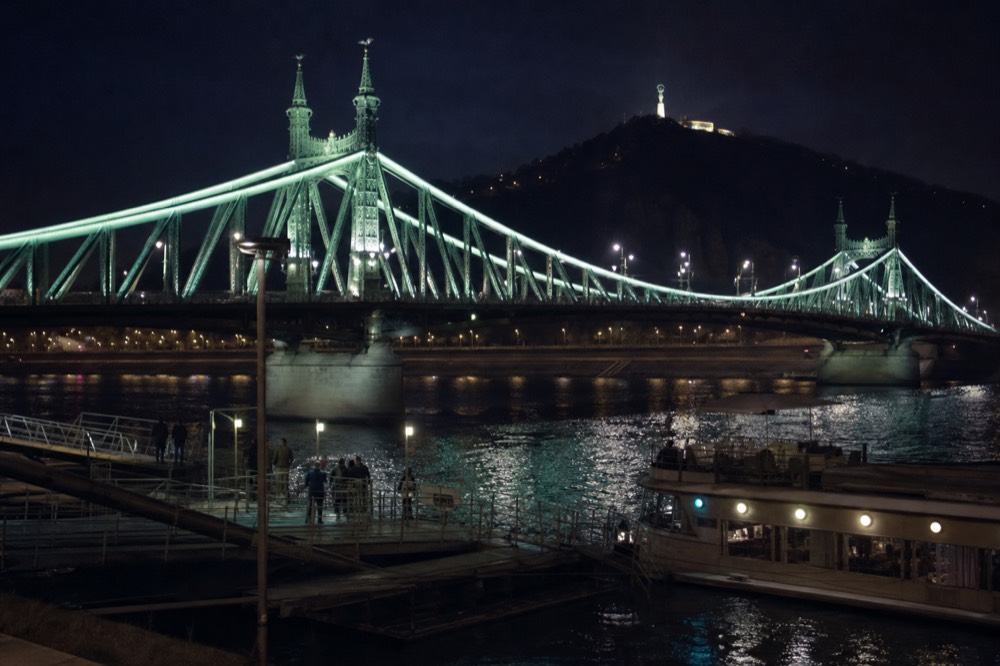
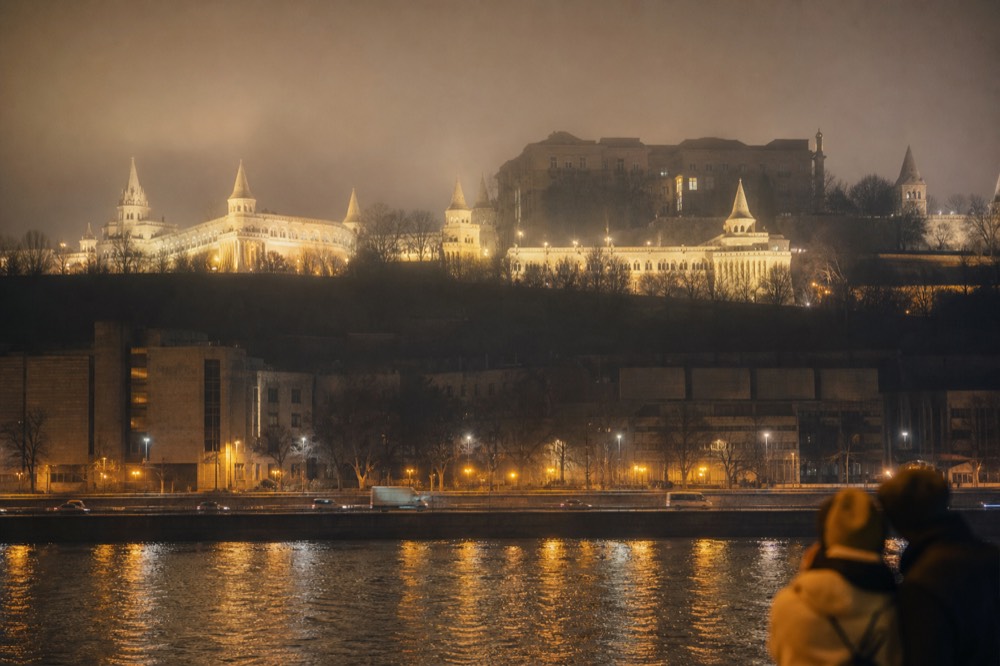
Further south, the Liberty Bridge, opened in 1896 as the Franz Joseph Bridge, and the Citadella fortress (built 1850–1854) on Gellért Hill are also illuminated, with the exact view depending on the route and conditions. On the Buda side, Fisherman’s Bastion’s seven white towers, representing the seven Magyar tribes, are lit softly and visible from the river as a fairy-tale silhouette.
The Parliament is a focal point of the after-dark riverfront panorama.
The Chain Bridge itself carries a story worth knowing as you drift beneath its illuminated cables. It was designed by the English engineer William Tierney Clark, built under the local supervision of the Scottish engineer Adam Clark, and initiated by Count István Széchenyi, whose advocacy for a permanent river crossing helped tie Buda and Pest together decades before the formal unification. Seeing those lit suspension cables from the water, it is easy to understand why this span, more than any other, became the symbol of the unified city.
The illuminated panorama you sail through is also protected ground. The Danube banks together with the Buda Castle Quarter were inscribed as a UNESCO World Heritage Site in 1987, and the listing was extended in 2002 to include Andrássy Avenue. On a night cruise this means nearly every lit landmark in view, from the Castle District above the Buda bank to the bridges strung across the river, sits within or beside a designated World Heritage area, which is rare among European capital cities.
Several operators run the evening trips that carry you past these sights. Legenda City Cruises uses glass-enclosed panoramic sightseeing boats with recorded audio guides in around 30 languages and a drink included with the ticket, departing from Dock 7 on Jane Haining rakpart. Duna Cruises operates a mixed fleet that includes the historical paddle steamers Kisfaludy and Hableány alongside a modern boat named Citadella, leaving from Dock 10 on the same embankment. Mahart PassNave, Hungary’s largest passenger shipping company, established in 1994 as the continuation of the state MAHART line, runs sightseeing and hop-on-hop-off Danube cruises from docks at Vigadó tér and Batthyány tér, giving you flexibility on where to board and how long to stay on the water.
Where do night cruises depart from?
Most night cruises depart from docks on the Pest embankment, specifically Jane Haining rakpart (docks 6, 7, 10, and 11) and Vigadó tér (dock 5), while a few board from the Buda side at Batthyány tér. Check your company’s exact location: Legenda uses dock 7, Duna Cruises dock 10, and Mahart PassNave operates from Vigadó tér and Batthyány tér, and aim to arrive 15–20 minutes early (checked September 2026).
The table below matches the main night cruise operators to their usual departure points. Always confirm your specific dock on the ticket or booking confirmation, as assignments can shift during peak season or special events.
| Operator | Typical dock(s) | Which night cruises |
|---|---|---|
| Legenda City Cruises | Jane Haining rakpart, Dock 7 | Candlelit dinner cruise (d499-35015P4) |
| MAHART | Vigadó Dock 5 or Batthyány Dock 1, by option | Night sightseeing (t69093) |
| Duna Cruises | Jane Haining rakpart, Dock 10 | Paddle steamer cruises, some sightseeing |
| Hungaria Koncert | Akadémia Dock 2 | Official sightseeing cruise (t179675) |
| Duna-Weser Kft. | Voucher-specific: Carl Lutz Dock 0, Akadémia 3 or Vigadó 8A | Unlimited prosecco cruise (t416276) |
| Hungária Koncert | Akadémia Dock 2 | Dinner options and live music (d499-5808DINNER) |
| Duna-Weser Kft. | Voucher-specific: Carl Lutz Dock 0, Akadémia 3 or Vigadó 8A | Spritz cruise (d499-337865P1) |
Dock locations are central and easy to reach on foot from the city centre. Tram line 2 runs along the Pest embankment and stops near both Jane Haining rakpart and Vigadó tér. If you are staying on the Buda side, Batthyány tér is served by metro line M2 and the HÉV suburban railway. For more detail on finding your boat, read our Budapest river cruise boarding locations guide.
What should I wear on a Budapest night cruise?
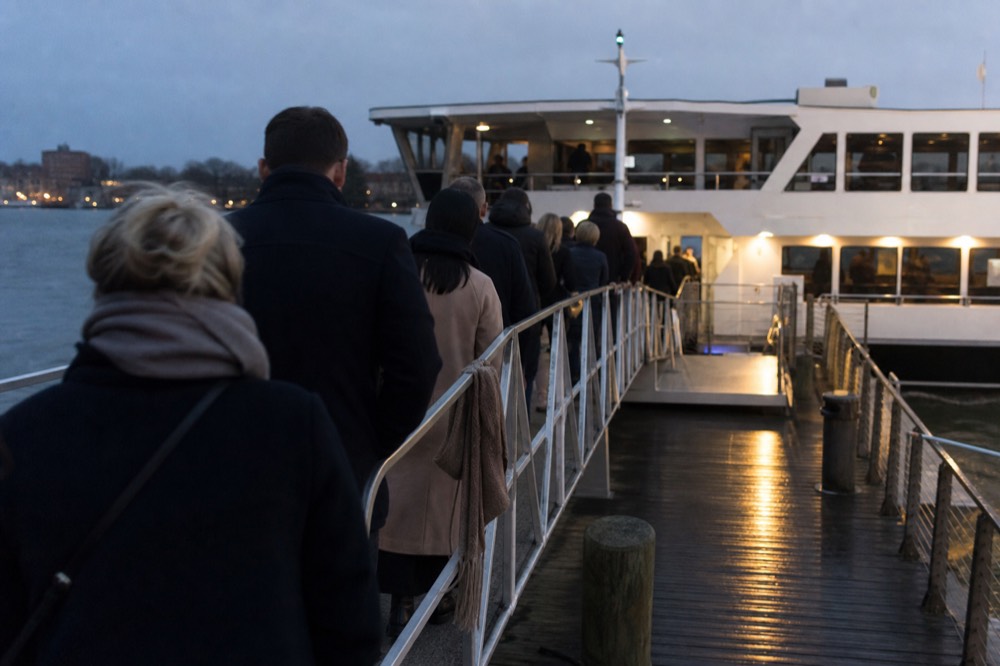
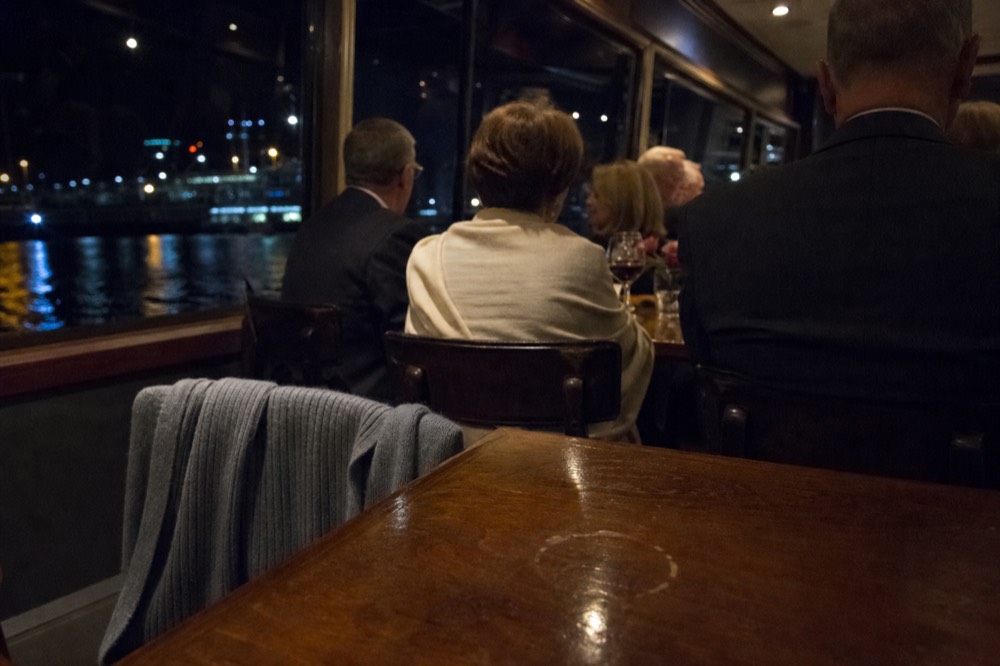
For a Budapest night cruise, dress in layers for cool river breezes and match the boat style: choose jeans, a warm layer, and a windproof jacket on sightseeing or drinks cruises, and smart casual attire like a dress or collared shirt for dinner cruises. Full formal wear is rare, and a heavy winter coat is mainly for boarding or deck time before you reach the heated indoor cabin.
The key is layers. A 50-minute sightseeing boat with an open top deck can feel chilly at 10 PM in May, while a glass-enclosed dinner boat is climate-controlled. If you are on an unlimited drinks cruise with an outdoor area, bring a jacket you don't mind getting a splash of spritz on. Footwear with a good grip helps on ramps and wet decks.
Are night cruises in Budapest worth it?
For most visitors, a Budapest night cruise is the single best way to see the city's architecture at its most dramatic. The illuminated Parliament alone is worth the ticket price, and the combination of fresh air, a drink and the passing skyline creates an experience that feels far more expensive than it is. With sightseeing night cruises starting from $22 and drinks cruises from $29 (checked September 2026), the value is hard to beat.
The short night cruises fit easily into a packed itinerary. You can finish dinner at 8:30 PM, walk to the dock, board a 9:30 PM departure and be back on land by 10:30 PM. For longer stays, a dinner cruise replaces a restaurant meal and adds a moving view. Our first-timer's guide to Budapest river cruises walks through the full range of daytime and night options, and the booking choices below let you compare the formats for your date.
Common questions about Budapest night river cruises
What is the best time for a Budapest night river cruise?
The best time is a departure that starts 30–45 minutes before sunset if you want the daylight-to-darkness transition, or a departure after local sunset on your travel date for the full illumination. Lighting schedules may vary; do not assume a late sailing guarantees every landmark is illuminated.
How long does a Budapest night river cruise last?
Most night cruises last between 50 minutes and 2 hours 30 minutes. Short sightseeing loops are around 50–75 minutes, drinks cruises about 75 minutes, and dinner cruises 1 hour 30 minutes to 2 hours 30 minutes (checked September 2026).
Are dinner cruises available at night?
Yes, several dinner cruises depart in the evening and run after dark. The Budapest Danube Cruise with Dinner Options, Live Music and Dance (1 hour 30 minutes) and the candlelit dinner cruise (2 hours 30 minutes) are two popular choices. They serve multi-course meals with live music and show the illuminated skyline throughout the sailing.
Can I see the Parliament illuminated from every night cruise?
Every standard Budapest night cruise passes the Parliament building, and the illumination is visible from the river. The best views are from the open deck or a window seat on the Parliament side of the boat. Some cruises slow down or loop back for a longer look.
What should I wear on a night cruise?
Casual layers and a windproof jacket work for sightseeing and drinks cruises. Dinner cruises lean smart-casual: a dress or a collared shirt is common. Heated indoor cabins mean you can shed heavy coats once inside, but you will want one for boarding and any time on deck.
Is a Budapest night cruise worth it?
For most visitors, yes. The illuminated Parliament and bridges create a skyline that looks far more expensive than the ticket price, and even the shortest 50-minute cruise delivers a memorable view. With prices starting from $22 (checked September 2026), it is one of the best-value experiences in the city.
Editorial starting point; no preferences entered
Budapest Paddle Steamer Danube Cruise with Tokaj & Audio Guide
Have your evening date in mind? Check the sightseeing departure time and choose a sailing that matches the after-dark view you want.
One hour, Duna Dock 10 on Pest. English audio via your own earphones, plus a Tokaj Frizzante or orange juice. No meal. Not wheelchair accessible.
Compare Options And Tailor This Choice
Start with what you know. Travel time to the meeting point is extra unless transport is explicitly included.
Age And Access Requirements
Alcohol service is for adults. Children must travel with an adult. Ask the operator about individual access needs; a blank preference is not an access assessment.
English audio via your own earphones, plus a Tokaj Frizzante or orange juice
One hour, Duna Dock 10 on Pest. English audio via your own earphones, plus a Tokaj Frizzante or orange juice. No meal. Not wheelchair accessible.
Four-course adult dinner, welcome drink and live music; children’s menu has three courses
2½ hours, Legenda Dock 7 on Pest. Four-course adult dinner, welcome drink and live music; children’s menu has three courses. Extra drinks cost more. No vegan menu. Not wheelchair accessible.
Unlimited sparkling wine, beer, listed spritzers, lemonade and water; food extra
Standard cruise: 75 minutes. Unlimited sparkling wine, beer, listed spritzers, lemonade and water; food extra. Dock depends on your selected option. Under-18s need an adult and receive no alcohol. Confirm individual access needs before booking.
Choose the departure option and follow its own meeting point
50-minute night sightseeing. Choose the departure option and follow its own meeting point. Drinks cost extra; audio guide is temporarily unavailable. Not suitable for wheelchair users.
Compare Your Actual Trip Costs
Use totals for the same party in one currency. Include travel to the meeting point, drinks and food in your independent total.
None of these experiences fits those choices. Adjust a filter or reset to see the starting options.
Published departure schedule. Seats and final price are confirmed on Viator.
We may earn a commission from affiliate bookings, at no extra cost to you. The provider confirms dates, final prices and options.