What is prosecco cruise Budapest?
The unlimited Prosecco, beer and spritz cruise is Budapest's open-bar boat trip on the Danube. This guide explains what unlimited actually covers, what the boats pass, what the format costs and who it suits.
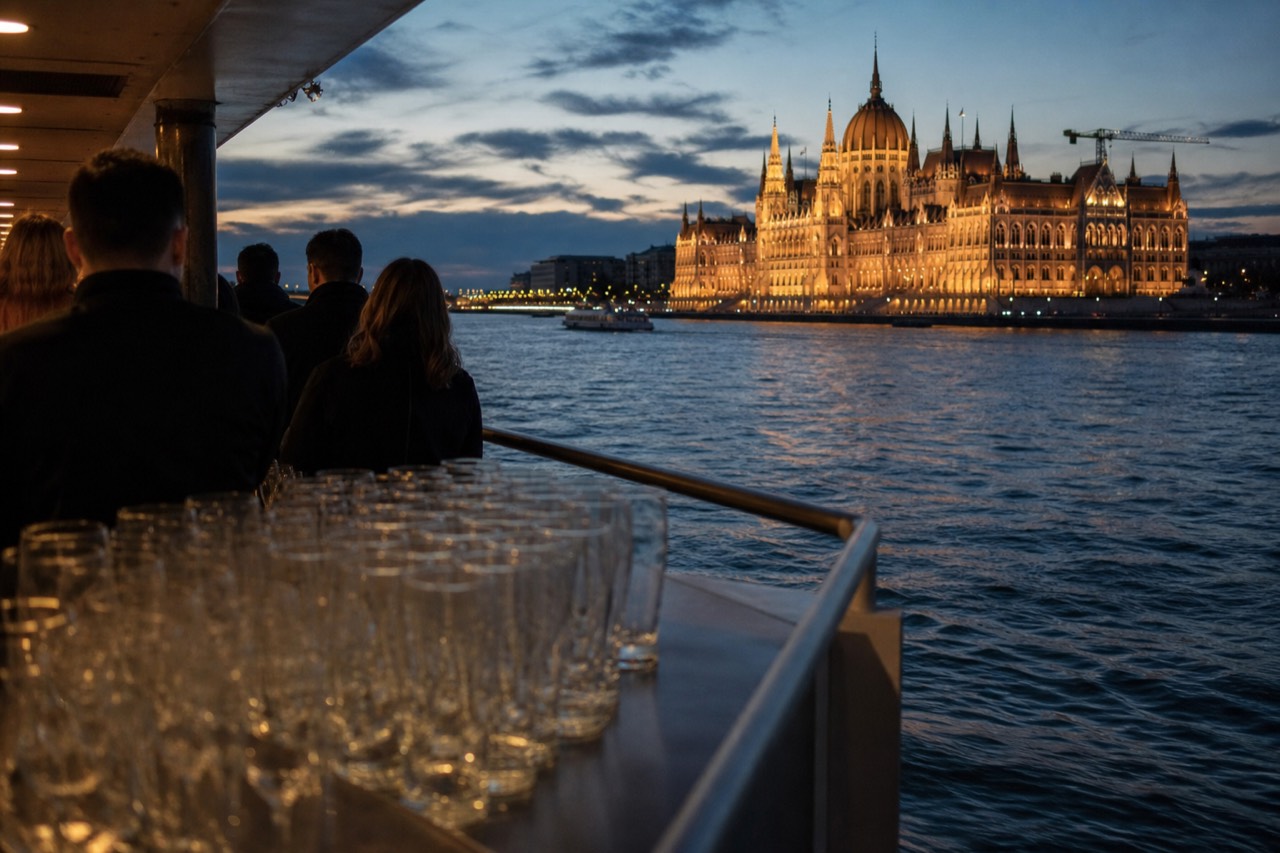
What is prosecco cruise Budapest?
A prosecco cruise in Budapest is a short Danube boat trip, about 75 minutes, where the ticket includes unlimited sparkling wine, beer and listed spritzers while the boat drifts past the Parliament building, Buda Castle and the Chain Bridge. It is a drinks-and-sightseeing format, not a dinner cruise, and tickets start from $29 per person (checked September 2026).
The phrase looks odd in a search bar because it is not a brand, an operator or an official product category. It is traveler shorthand for a format that has become one of Budapest's most popular evening outings: a boat, a fixed loop along the central Danube, and a bar tab that is already paid. The two live listings that sell it both run about 75 minutes (checked September 2026), long enough to pass every major landmark between Margaret Island and the southern bridges without eating a whole evening.
What separates it from the other cruises on this site is the ticket structure. A sightseeing cruise sells you the view. A dinner cruise sells you the view plus a seated meal. A prosecco cruise sells you the view plus an open bar, and the open bar is the point: the format works for groups, birthdays, celebrations and anyone who wants the skyline lit up while holding a glass of something cold. This Budapest River Cruises guide unpacks what the format actually includes, where the boats leave from, and the honest limits of the word unlimited.
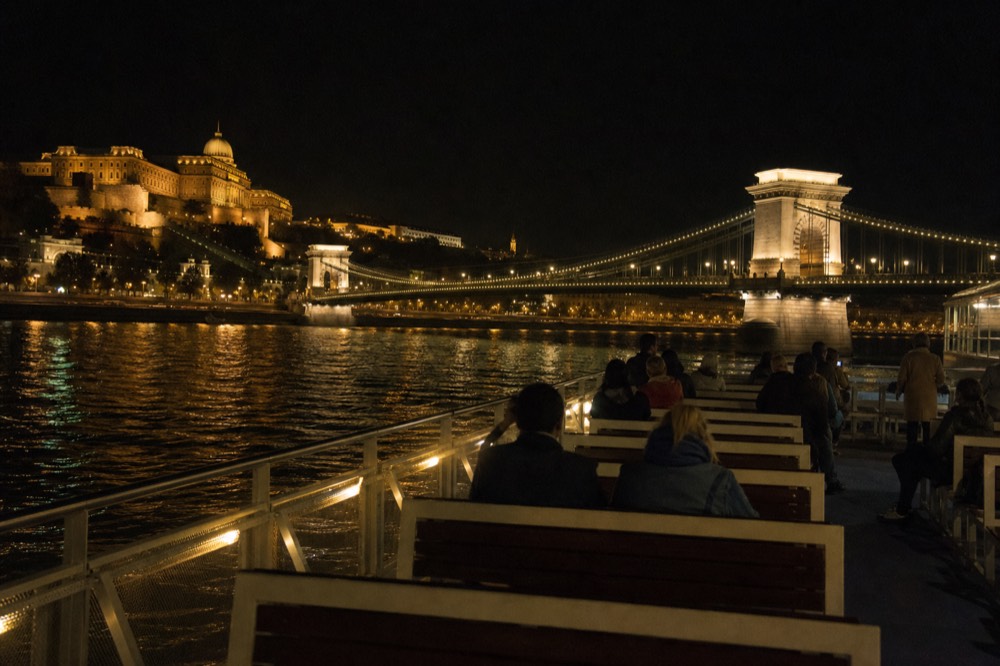
The format also travels well across the seasons. Budapest Danube cruises run year-round, and the boats carry heated indoor cabin areas for winter departures, so a spritz cruise in December is a real option rather than a fair-weather novelty. The Danube in Budapest rarely freezes solid enough to halt cruise operations at all.
If the format already sounds like your kind of evening, these are the three listings worth comparing first: the unlimited spritz cruise itself, the near-identical spritz listing with the largest review file on this site, and a shorter sightseeing cruise for travelers who want the views without an unlimited-drinks package.
Does an unlimited prosecco cruise actually exist in Budapest?
Yes. Two live listings sell an unlimited spritz cruise in Budapest, both under the name Unlimited Prosecco, Beer, Aperol and Limoncello Spritz Cruise, both from $29 per person and both running about 75 minutes (checked September 2026). One holds a 4.6 rating across 3,705 reviews; the other has 48,175 reviews on file with no star rating (checked September 2026).
The first listing is the one most travelers find on their own. It carries a 4.6 rating across 3,705 reviews (checked September 2026), a large and settled body of feedback for a single Budapest boat product. It runs about 1 hour 15 minutes (checked September 2026), prices from $29 per person (checked September 2026), and it is operated by Duna-Weser Kft. What is confirmed is the format: unlimited Prosecco, beer, Aperol spritz and limoncello spritz for the length of the sailing.
The second listing sells the same named format on a different seller page. It has 48,175 reviews on file, an unusually large count for any Budapest tour, though no star rating is published on file, so the honest way to describe it is by the review count alone (checked September 2026). This one is operated by Duna-Weser Kft., runs 75 minutes (checked September 2026) and prices from $29 per person (checked September 2026). Its on-file notes are the most detailed of the pair: open-air viewing areas are subject to weather, an indoor lounge is available, and accessibility depends on the vessel and dock, and mobility scooters are prohibited.
Where do you find them? Both are bookable through the operators' live listings linked from this page, and the boats board from the numbered docks on the Pest embankment, with several operators using Jane Haining rakpart docks 6, 7, 10 and 11. The exact dock depends on the selected departure. The featured Viator product lists Carl Lutz Rakpart 0, Vigadó 8/a and Akadémia 3 options; check the meeting point on your ticket. Mahart PassNave, Hungary's largest passenger shipping company, established in 1994, also runs drinks cruises from the Buda side at Batthyány tér, which is worth knowing if your hotel sits closer to the Castle District. Whatever departure you book, the standard advice on file is to arrive 15 to 20 minutes before sailing, since the boats leave on a fixed schedule.
What does unlimited actually cover on board?
The standard 75-minute package includes sparkling wine, beer, listed spritzers, lemonade and water, subject to the crew’s responsible-service rules. It does not include food. Open-air decks are subject to weather, an indoor lounge is available, and accessibility depends on the vessel and dock, and mobility scooters are prohibited.
Unlimited, on these listings, means the four named drinks are served without a per-drink charge for the full length of the cruise. There is no food component hiding in the ticket. If a listing wanted to sell you dinner, it would sit in the dinner-cruise format instead, where operators such as Hungaria Koncert Ltd. run a 90-minute goulash cruise with lángos or dessert and music on a historic ship, 2,406 reviews on file, price on the live listing (checked September 2026).
“Prosecco cruise” is common shorthand, but the featured Viator listing currently specifies Hungarian sparkling wine, beer and several spritzers, plus lemonade and water. Check the beverage selection on your chosen package rather than assuming Italian Prosecco. The on-file notes for the boats describe open-air viewing areas that are subject to weather and an indoor lounge that is available when the decks get cold or wet. That layout matters more than it sounds. The spritz cruise lives on the deck: the Parliament building lit up at night is the single most famous view on the route, and you want to be outside with a glass when it passes.
| What the ticket covers | What is on file |
|---|---|
| Sparkling wine | Unlimited; the Viator listing specifies Hungarian sparkling wine |
| Beer | Unlimited |
| Aperol spritz | Unlimited |
| Limoncello spritz | Unlimited |
| Open-air viewing areas | Subject to weather |
| Indoor lounge | Available on board |
| Wheelchair and mobility scooter access | Confirm vessel and dock access; mobility scooters prohibited on the GYG listing |
| Dinner | Not part of the spritz-cruise ticket |
The accessibility line deserves plain language. Current access details depend on the vessel and dock; the GYG listing prohibits mobility scooters. Travelers who need step-free access should confirm directly on the operator's live listing before booking, and the same caution applies to anyone with limited mobility, since boarding a Danube boat usually involves a gangway.
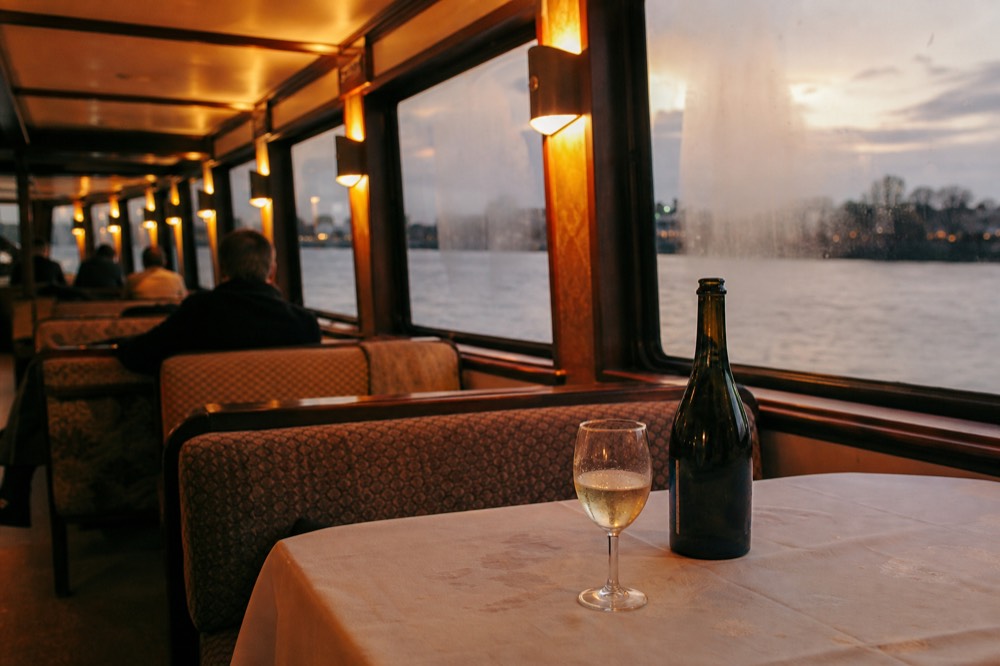
One honest caveat: unlimited is a bar-service promise, not a guarantee of a glass in hand at every moment. Service runs the length of the sailing and the boats are staffed for the format, but a busy Friday departure with a full deck means a queue at the bar. Unlimited service remains subject to the crew’s responsible-service rules; it does not guarantee immediate service or continued alcohol service to intoxicated guests.
Choose a departure time that fits your evening before arranging a separate dinner.
What do you actually see from the boat?
The boat passes nearly every landmark that makes Budapest a river city: the Hungarian Parliament Building, the Chain Bridge, Fisherman's Bastion and Buda Castle on the hill, the green Liberty Bridge and the Shoes on the Danube Bank memorial. Daytime trips show it all in natural light, and night departures are timed for the illuminated skyline.
The central Danube is a dense run of landmarks, and a 75-minute loop passes nearly all of them. The Hungarian Parliament Building sits directly on the Pest bank, designed by architect Imre Steindl in Gothic Revival style and built between 1885 and 1904, and it is illuminated at night by an extensive lighting system that makes it the signature shot of any Budapest cruise. Across the river, Castle Hill carries Buda Castle and the Fisherman's Bastion, a Neo-Romanesque viewing terrace designed and built by architect Frigyes Schulek between 1895 and 1902, its seven towers representing the seven Magyar tribes that settled the Carpathian Basin.
The bridges tell the city's story in iron and stone. The Széchenyi Chain Bridge, the first permanent bridge across the Danube in Budapest, opened on November 20, 1849, designed by English engineer William Tierney Clark and built under the local supervision of Scottish engineer Adam Clark. Ten bridges currently cross the Danube within Budapest, eight carrying vehicle traffic and two carrying railways. The Liberty Bridge, opened on October 4, 1896 as the Ferenc József híd, wears the bottle-green color restored in 1984. Margaret Island, home to parks, historic ruins and a music fountain, sits in the river between Margaret Bridge and Árpád Bridge, and cruise boats pass it in plain view.
| Landmark | What you see from the water | Date on file |
|---|---|---|
| Hungarian Parliament Building | Gothic Revival spires and dome on the Pest bank, lit at night | Built 1885 to 1904 |
| Széchenyi Chain Bridge | The city's first permanent Danube crossing | Opened November 20, 1849 |
| Fisherman's Bastion | Seven Neo-Romanesque towers on Castle Hill | Built 1895 to 1902 |
| Liberty Bridge | Bottle-green road bridge at the southern end of the loop | Opened October 4, 1896 |
| Shoes on the Danube Bank | Sixty pairs of cast-iron period shoes on the Pest embankment | Installed April 16, 2005 |
The quietest moment on the route is also the heaviest. The Shoes on the Danube Bank memorial, created by film director Can Togay and sculptor Gyula Pauer, commemorates the mostly Jewish victims shot into the river by Arrow Cross militiamen in 1944-45. The memorial is best understood as a place of remembrance. The same stretch of river carries a music fountain and a memorial, sometimes within the same hour, and that contrast is part of what makes the Budapest riverfront unusual in Europe. The banks themselves, together with the Buda Castle Quarter, were inscribed as a UNESCO World Heritage Site in 1987, with the listing extended in 2002 to include Andrássy Avenue.
Timing changes everything on this route. Daytime departures commonly run roughly hourly through the afternoon and show the riverfront in natural light; evening and night departures are timed to show the illuminated Parliament, Buda Castle and bridges after dark. For most travelers the night departure is the one to take, and the timing questions around every cruise type are covered in more detail in how long a Budapest river cruise runs.
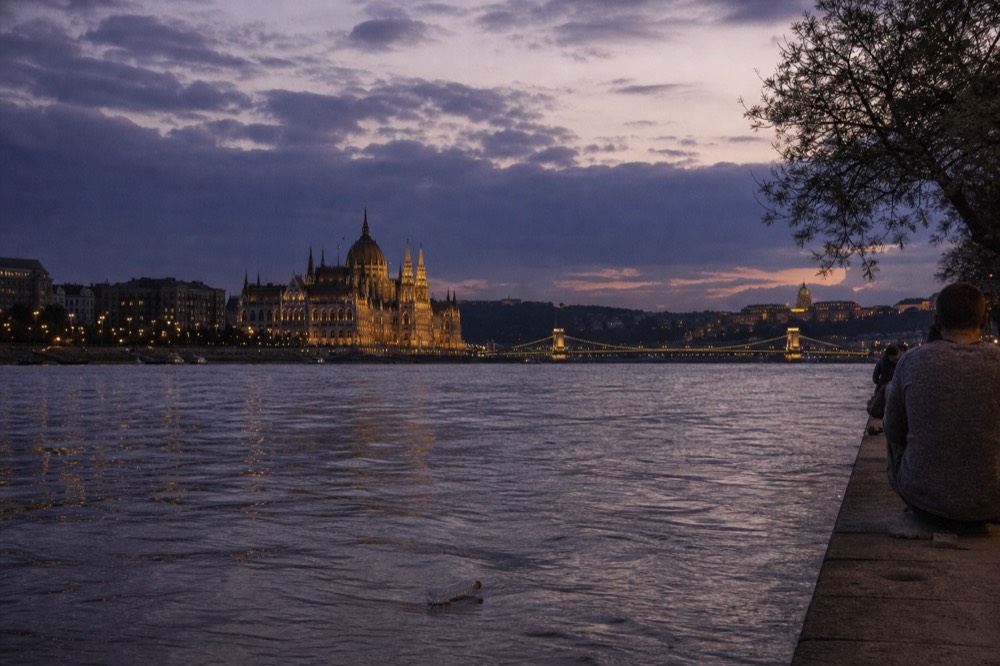
How much does a prosecco cruise cost and how long does it last?
The unlimited spritz cruises start from $29 per person and run about 75 minutes (checked September 2026). The closest alternative, a MAHART night sightseeing cruise with drinks extra, runs about 50 minutes (checked September 2026) and its price is on the live listing. Spritz cruises sail year-round, with heated indoor cabins for winter departures.
The headline number is easy to remember: both unlimited spritz listings price from $29 per person (checked September 2026), which places the format at the cheap end of Budapest's cruise menu, below the dinner cruises and roughly in line with plain sightseeing tickets. The official sightseeing cruise on the historic Gróf Széchenyi ship, for comparison, prices from $22 per person with 632 reviews on file (checked September 2026), and it includes live music but no drinks tab.
Every figure in the table below was checked September 2026; where a listing publishes no number, the table says so rather than guessing.
| Cruise | Price | Duration | Reviews on file |
|---|---|---|---|
| Unlimited spritz cruise, listing one | From $29 per person (checked September 2026) | About 1 hour 15 minutes | 4.6 rating across 3,705 reviews |
| Unlimited spritz cruise, listing two | From $29 per person | 75 minutes | 48,175 reviews (checked September 2026), no star rating on file |
| MAHART night sightseeing cruise; drinks extra | On the live listing | About 50 minutes | Rated 5 on the listing, too few reviews to state |
The night cruise in the third row is the format's closest rival. It runs about 50 minutes (checked September 2026), has drinks available for purchase rather than an included open bar, carries a 5 rating on the listing with too few reviews to state a count (checked September 2026), and its price is on the live listing. It suits travelers who want a short sightseeing trip; the spritz format suits travelers who want the drinks to last the whole sailing.
For the money, the first spritz listing is the one this site points most travelers toward. Its 4.6 rating across 3,705 reviews (checked September 2026) is the strongest verified feedback file of the spritz pair, and the from-$29 entry price (checked September 2026) undercuts most big nights out in the city center. The full price picture across every cruise type is laid out in the Budapest river cruise tickets and prices guide.
Is a prosecco cruise in Budapest worth it?
For most travelers the arithmetic is simple: unlimited drinks plus 75 minutes of riverfront sightseeing from $29 per person (checked September 2026) is strong value, and the format is among the most-discussed Budapest cruise picks online. It suits groups and casual sightseers; anyone wanting a meal should pick a dinner cruise instead.
The honest answer is that the format earns its popularity. Unlimited drinks plus 75 minutes of riverfront sightseeing from $29 per person (checked September 2026) is a hard price to beat for an evening out in a European capital, and the two large review files behind the listings, 3,705 reviews at 4.6 and 48,175 reviews on file (checked September 2026), are a reason to read recent feedback for the package you are considering.
It is also fair to say the format is a well-discussed pick among real travelers online. That observation is made carefully here: no specific quote or review is cited, because the honest version of the claim is that the discussion exists in bulk across travel forums and review threads, not that any single line of praise settles the question. A format this cheap, this social and this photogenic generates its own conversation, and the review counts are the measurable trace of it.
Who should book it? Groups, birthday parties and travelers on a short city break who want one memorable evening without logistics. Who should skip it? Travelers who want a seated meal with live music should look at the dinner-cruise format instead, covered in full in the Budapest dinner cruise guide, and travelers who need step-free access should confirm the boat's accessibility directly on the live listing before committing.
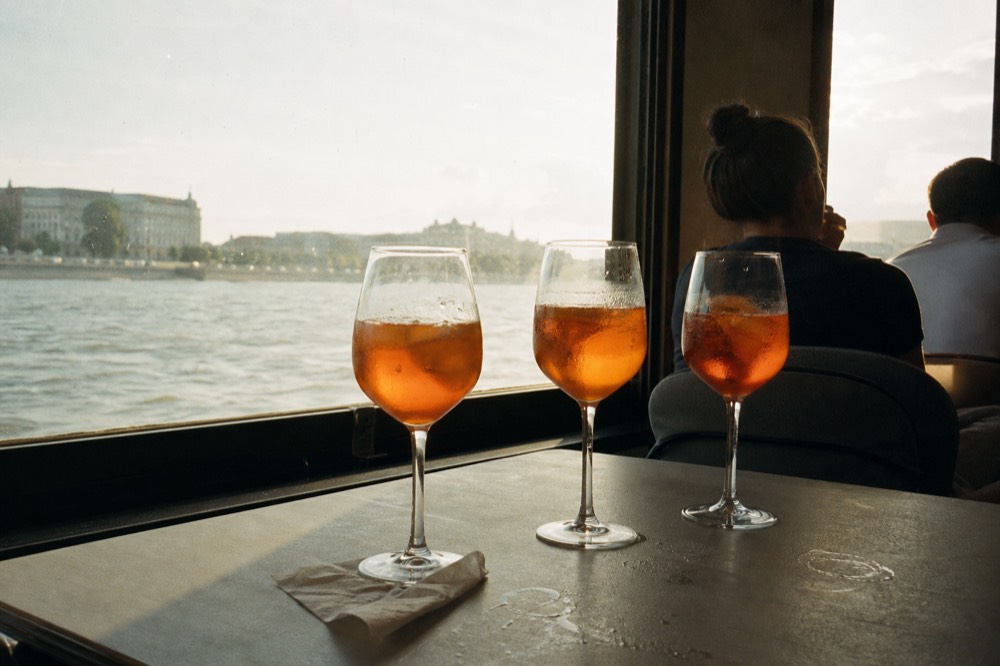
The standard drinks sailing does not include dinner. Open decks depend on the weather, and access varies by vessel and dock; both featured providers ask travelers to confirm their specific departure’s access in advance, and the GYG listing prohibits mobility scooters. Within those limits it is the most social way to see the illuminated Danube, and the three listings below cover the format itself, its near-identical twin and the lighter night-cruise alternative.
A prosecco cruise in Budapest is a roughly 75-minute Danube boat trip with unlimited Prosecco, beer, Aperol spritz and limoncello spritz included in the ticket, from $29 per person (checked September 2026). The questions below cover the short version of everything this guide explains in depth: whether the format really exists, what unlimited covers, accessibility, cost and where the boats leave from.
Common questions about prosecco cruises in Budapest
What is prosecco cruise Budapest?
It is traveler shorthand for a Budapest Danube boat trip, about 75 minutes long (checked September 2026), where the ticket includes unlimited sparkling wine, beer and listed spritzers alongside the standard sightseeing loop past the Parliament building, Buda Castle and the Chain Bridge. It is not a brand or an operator name, and tickets start from $29 per person (checked September 2026).
Does an unlimited prosecco cruise actually exist in Budapest?
Yes. Two live listings sell the format under the name Unlimited Prosecco, Beer, Aperol and Limoncello Spritz Cruise, both from $29 per person and both about 75 minutes (checked September 2026). One carries a 4.6 rating across 3,705 reviews and the other has 48,175 reviews on file with no star rating published (checked September 2026).
What drinks are included on a prosecco cruise in Budapest?
The standard package lists sparkling wine, beer, several spritzers, lemonade and water, subject to responsible-service rules. There is no dinner component in the spritz-cruise ticket; food belongs to the separate dinner-cruise format.
Is a prosecco cruise in Budapest suitable for wheelchair users?
Current access details depend on the vessel and dock; the GYG listing prohibits mobility scooters. Travelers needing step-free access should confirm directly on the operator's live listing before booking.
How much does a prosecco cruise in Budapest cost?
Both unlimited spritz listings price from $29 per person (checked September 2026). A shorter MAHART night sightseeing cruise with drinks sold separately also runs; its price is on the live listing.
Where do prosecco cruises in Budapest leave from?
The featured drinks sailings use departure options at Carl Lutz Dock 0, Akadémia 3 or Vigadó 8A on the Pest side. The exact dock is printed on each live listing, and the advice on file is to arrive 15 to 20 minutes before departure.
Editorial starting point; no preferences entered
Unlimited Prosseccoo, Beer, Aperol & Limoncello Spritz Cruise
Pick the date for your Danube drinks outing before arranging dinner; check the package and departure time that suit your group.
Standard cruise: 75 minutes. Unlimited sparkling wine, beer, listed spritzers, lemonade and water; food extra. Dock depends on your selected option. Under-18s need an adult and receive no alcohol. Confirm individual access needs before booking.
Compare Options And Tailor This Choice
Start with what you know. Travel time to the meeting point is extra unless transport is explicitly included.
Age And Access Requirements
Alcohol service is for adults. Children must travel with an adult. Ask the operator about individual access needs; a blank preference is not an access assessment.
Unlimited sparkling wine, beer, listed spritzers, lemonade and water; food extra
Standard cruise: 75 minutes. Unlimited sparkling wine, beer, listed spritzers, lemonade and water; food extra. Dock depends on your selected option. Under-18s need an adult and receive no alcohol. Confirm individual access needs before booking.
Food extra; check the selected option’s dock
75 minutes with unlimited sparkling wine, beer, listed spritzers, lemonade and water. Food extra; check the selected option’s dock. Under-18s need an adult and receive no alcohol. Confirm individual access needs before booking.
English audio via your own earphones, plus a Tokaj Frizzante or orange juice
One hour, Duna Dock 10 on Pest. English audio via your own earphones, plus a Tokaj Frizzante or orange juice. No meal. Not wheelchair accessible.
Compare Your Actual Trip Costs
Use totals for the same party in one currency. Include travel to the meeting point, drinks and food in your independent total.
None of these experiences fits those choices. Adjust a filter or reset to see the starting options.
Published departure schedule. Seats and final price are confirmed on Viator.
We may earn a commission from affiliate bookings, at no extra cost to you. The provider confirms dates, final prices and options.