Is a Danube River cruise in Budapest worth it?
An honest verdict on Budapest Danube cruises using the real review counts and prices on file across sightseeing, drinks and dinner formats, plus when a cruise is not worth the money.
Is a Danube River cruise in Budapest worth it?
For most visitors, yes. The core sightseeing product starts from $22 per person (checked September 2026), the unlimited prosecco cruise starts from $29 (checked September 2026), and the most-reviewed dinner cruise holds a 4.7 rating across 7,557 reviews (checked September 2026). The value rests on the view: the Danube riverfront is a UNESCO-listed panorama. Access needs require a product-specific check, and these local sailings are not multi-day voyages.
That is the whole question in one paragraph, but the honest version needs more room. "Worth it" depends on which of three different products you are actually buying, because a Budapest river cruise is not one thing. There is a basic sightseeing boat, there is a drinks-and-cruise combination, and there is a seated dinner with live music. They cost different amounts, run for different lengths of time, and satisfy different people. Treating them as one product is how bad buying decisions happen.
This site, Budapest River Cruises, exists to answer the worth-it question with listing data rather than marketing copy, so everything below comes from the actual review counts, durations and prices on file for the tours sold here. Where a figure is not published, it says so instead of guessing.
One framing note before the numbers. A river cruise in Budapest is a 50-minute to 2.5-hour local boat ride, not a voyage. Nobody boards at 8 p.m. and wakes up in another country. Judged as a compact, repeatable evening activity in a walkable city, the value case is strong. Judged against a fantasy of a multi-day river voyage, it will always disappoint, and no local operator sells that fantasy anyway.
With that settled, these are the three formats that most people are choosing between.
What do the review numbers actually say about river cruises in Budapest?
The review base is unusually deep for a city-boat product. The dinner cruise carries 7,557 reviews at a 4.7 rating, the unlimited prosecco cruise has 48,175 reviews on file, and the candlelit dinner cruise holds 4.7 across 1,979 reviews (all checked September 2026). Tens of thousands of paying passengers have left feedback, and the consistent picture is satisfaction in the 4.6 to 4.7 band rather than either hype or disaster.
Start with the biggest number. The Unlimited Prosecco, Beer, Aperol and Limoncello Spritz Cruise has 48,175 reviews on file (checked September 2026). That is an enormous sample for a 75-minute boat ride, and it exists because the product is cheap, social and easy to sell to groups. The figures here are a historical snapshot. Review volume shows how many ratings were recorded, not whether the same passengers returned.
The dinner side of the market tells a similar story with more detail. The Budapest Danube Cruise with Dinner Options, Live Music and Dance holds a 4.7 rating across 7,557 reviews (checked September 2026), runs about 1 hour 30 minutes, and lists tickets from $58 per person (checked September 2026). It is the single most-reviewed tour this site carries, and it is the one most people mean when they ask whether "the dinner cruise" is worth it.
The candlelit variant, operated by Legenda Cruises from Dock 7 on Jane Haining rakpart, holds the same 4.7 rating across 1,979 reviews (checked September 2026) and runs a longer 2 hours 30 minutes with a four-course meal. Its price is on the listing rather than published as a from-figure. Smaller listings show the long tail: the official sightseeing cruise on the historic Gróf Széchenyi ship has 632 reviews (checked September 2026) on file, the Hungarian dinner cruise with live folk music has 2,406, the paddle steamer cruise with Tokaj wine has 429, and the night sightseeing cruise was recorded with a 5 rating but too few reviews to state a count with confidence; drinks are now extra (all checked September 2026).
Here is the full picture from the listings on file (checked September 2026):
| Tour | Format | Rating | Reviews on file | Duration | Price |
|---|---|---|---|---|---|
| Danube Cruise with Dinner Options, Live Music and Dance | Dinner | 4.7 | 7,557 | about 1 hour 30 minutes | from $58 (checked September 2026) |
| Candlelit Dinner Cruise with Live Music | Dinner | 4.7 | 1,979 | 2 hours 30 minutes | on the listing |
| Goulash With Lángos Or Dessert | Light meal | no star on file | 2,406 | 90 minutes | on the listing |
| Unlimited Prosecco, Beer, Aperol and Limoncello Spritz Cruise | Drinks | no star on file | 48,175 | 75 minutes | from $29 (checked September 2026) |
| Official Sightseeing Cruise on the Gróf Széchenyi | Sightseeing | no star on file | 632 | 90 minutes | from $22 |
| Paddle Steamer Cruise with Tokaj Wine and Audio Guide | Sightseeing | no star on file | 429 | about 1 hour | on the listing |
| Night Sightseeing Cruise (Drinks Extra) | Sightseeing | 5 on the listing | too few to state | about 50 minutes | on the listing |
Read the table honestly. A 4.7 across thousands of reviews means most passengers got exactly what the listing promised: a boat, a meal or a drink, and the lit-up riverfront. It does not mean fine dining or a luxury vessel. The reviews measure whether a modest product delivered a modest promise, and consistently, it did. That is the correct standard for a worth-it verdict.
How much does a river cruise in Budapest cost?
Entry-level sightseeing was recorded from $22 per person, with the official sightseeing product now listed at 90 minutes, the unlimited-drinks cruise starts from $29 for 75 minutes, and the dinner formats start from $58 for about 90 minutes with a meal and live music (all checked September 2026). Several listings publish no from-price at all, so their cost is on the operator's live listing rather than stated here.
The cheapest structured option on file is the Official Sightseeing Cruise on the Danube, operated by Hungaria Koncert Ltd. aboard the historic Gróf Széchenyi ship, from $22 per person (checked September 2026). It runs 90 minutes, and its selling point is the vessel itself plus live music rather than food or drink. For a first-time visitor who mainly wants to see the riverfront from the water and spend the rest of the budget elsewhere, it is the rational floor price for the experience.
The middle tier is where Budapest's most social product sits. The Unlimited Prosecco, Beer, Aperol and Limoncello Spritz Cruise, operated by Duna-Weser Kft., runs 75 minutes with unlimited drinks and panoramic windows, from $29 per person (checked September 2026). Its open-air viewing areas are subject to weather, with an indoor lounge available. Check the selected boat’s access arrangements directly with the operator. The drinks-included format is covered in more detail in the unlimited prosecco cruise guide.
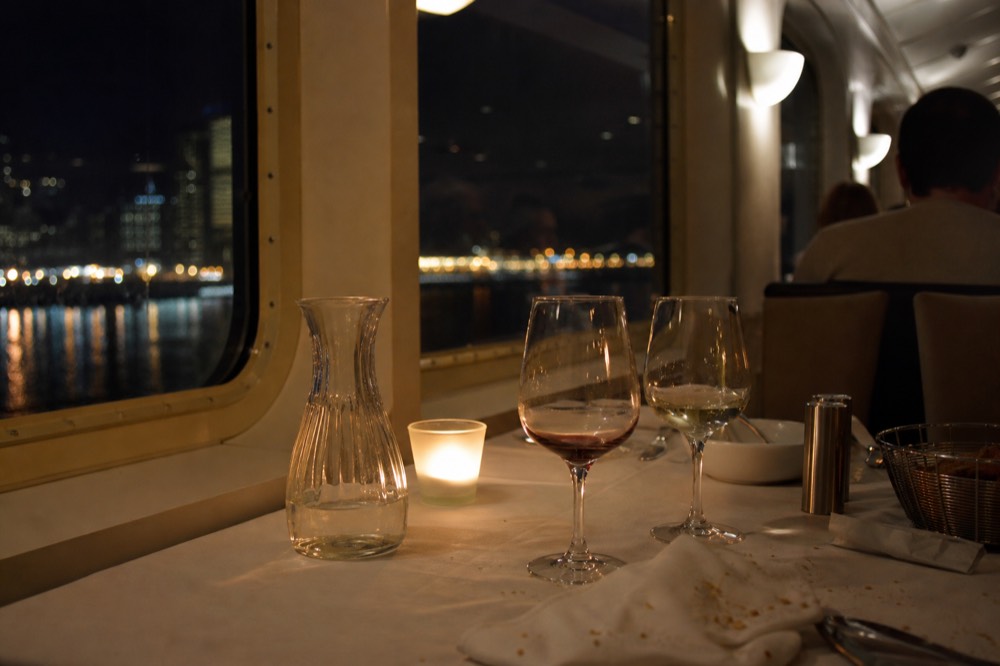
The dinner tier changes the calculation. At from $58 per person (checked September 2026) for roughly 90 minutes with a meal and live music, you are paying restaurant prices for a restaurant-plus-view experience. Whether that is worth it depends on whether you would otherwise spend a similar amount on a riverside dinner table with no boat attached. The candlelit and Hungarian dinner cruises publish no from-price, so their cost is on their live listings; the full format comparison lives in the Budapest dinner cruise guide.
Here is how the tiers stack up on the figures on file (checked September 2026):
| Tier | What you get | Typical duration | Price floor on file |
|---|---|---|---|
| Basic sightseeing | Seat on a boat, riverfront panorama, sometimes live music or audio guide | about 50 to 90 minutes | from $22 |
| Drinks cruise | Unlimited prosecco, beer and spritzes plus the same panorama | about 1 hour 15 minutes | from $29 (checked September 2026) |
| Dinner cruise | Seated meal, live music, the illuminated riverfront after dark | 90 minutes to 2 hours 30 minutes | from $58 |
One cost note that has nothing to do with tickets: operators advise arriving 15 to 20 minutes before departure, since boats leave on a fixed schedule. A missed departure is the most expensive mistake in this market, because the ticket is gone with the boat.
So is the money worth it? If the question is whether the cruise is a fair price for the view, the answer is yes at every tier on file. If the budget is tight, compare live quotes for sightseeing and drinks against the meal-inclusive option: the same riverfront panorama does not require a dinner ticket.
When is a river cruise in Budapest not worth it?
Several featured cruises explicitly exclude wheelchair users, so access requirements need checking before buying a ticket. It is also the wrong product for anyone expecting a multi-day river voyage, since every tour here runs between 50 minutes and 2 hours 30 minutes. And if your goal is a guided commentary experience, check what the listing actually includes before booking.
Access depends on the specific boat and boarding setup. Legenda’s candlelit cruise, Duna’s historic cruise and the Hungaria Koncert sightseeing and goulash listings state that they are not wheelchair accessible. Access for the drinks cruise has not been established here; ask its operator about the selected departure rather than assuming either suitability or exclusion.
The second mismatch is expectation. Search results for "Danube river cruise" mix two completely different products: local Budapest sightseeing and dinner boats, and multi-day luxury voyages between cities. This site sells only the first kind. Riverside Cruises, for example, is a real river-cruise line, but it runs multi-day Danube cruises that pass through Budapest as one stop among several. If your mental image is a floating hotel, a 75-minute spritz cruise will not match it, and no amount of good reviews will fix that.
A third confusion lives on the Budapest tour market itself. Riverride is a real Budapest company, but its amphibious buses drive on land past the sights before a short Danube segment. It is a legitimate product, but it is not a river cruise, and buyers who expected a boat for the full duration are the source of avoidable disappointment.
Weather is a softer caveat. The prosecco cruise's open-air decks are subject to conditions, with an indoor lounge as backup, and for the other listings no verified weather-behavior note exists on file, so conditions are on the operator's listing. The river itself is rarely the problem: the Danube in Budapest seldom freezes solid enough to halt operations, and boats run year-round with heated indoor cabins. Winter cruises are real, not theoretical.
Finally, there is the value-of-time question. If you have exactly one evening in Budapest and hate boats, crowds or standing queues, no review count will change your mind, and that is a legitimate verdict too. The cruise is a view-delivery product, and the view is the entire purchase.
What do you actually see from the water on a Budapest cruise?
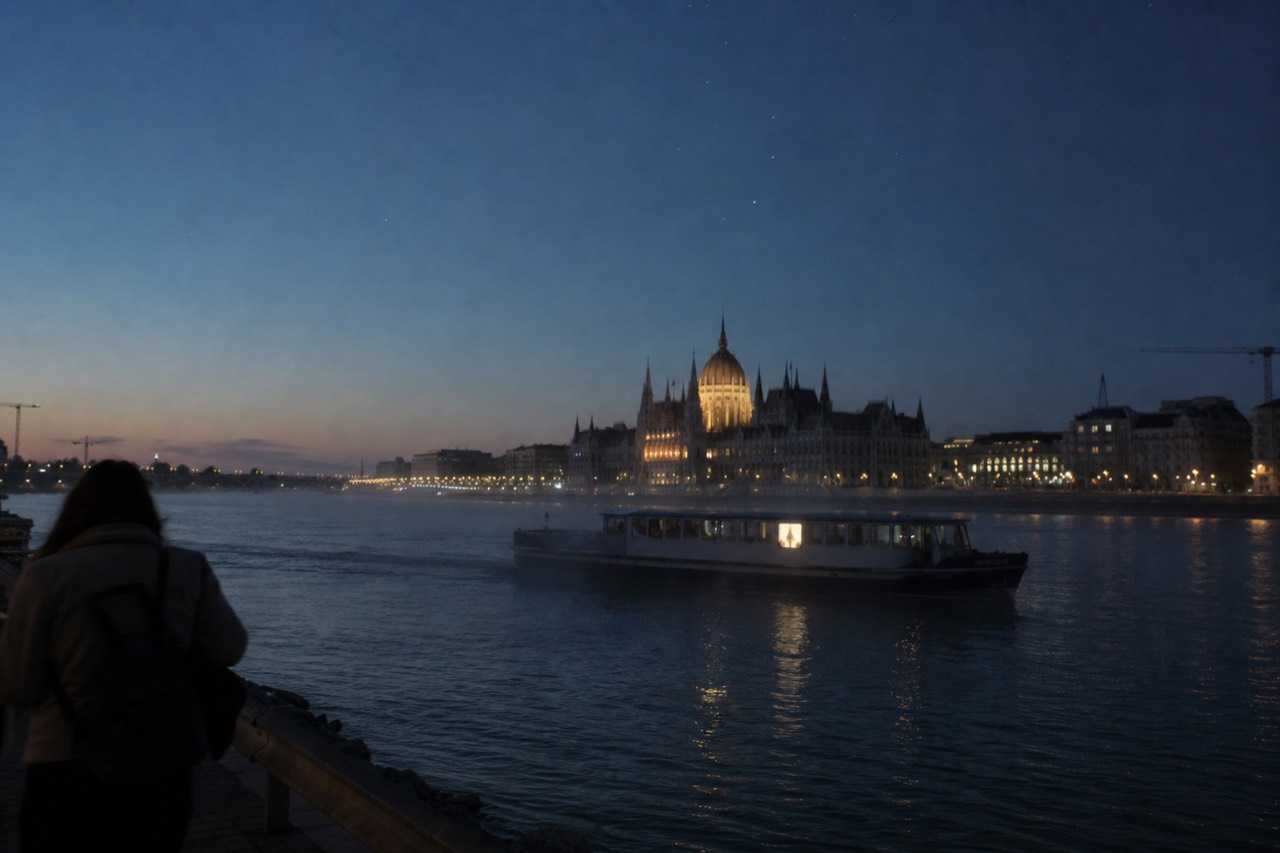
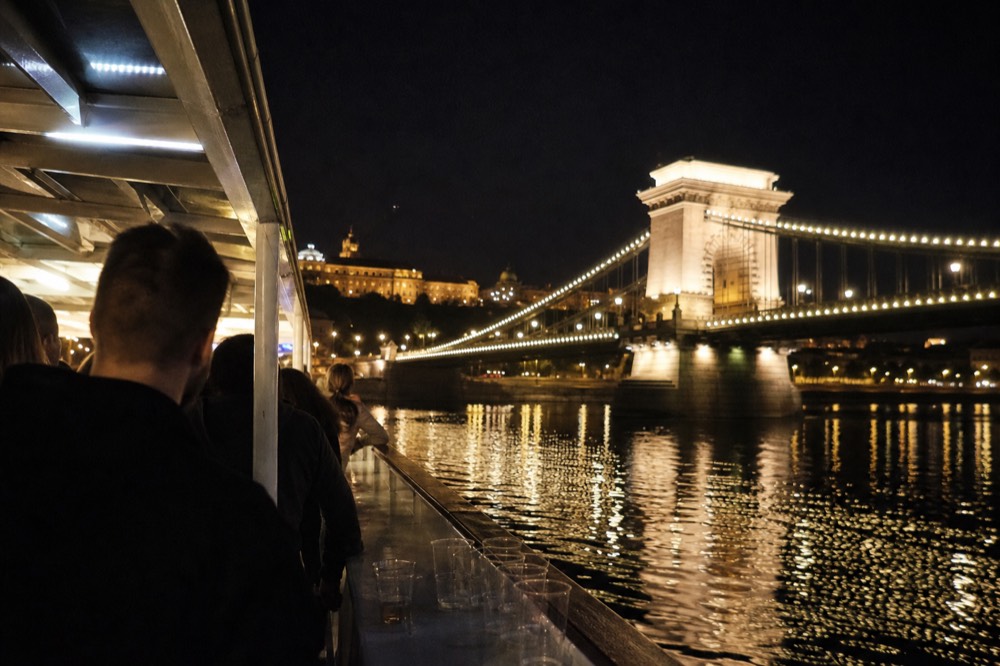
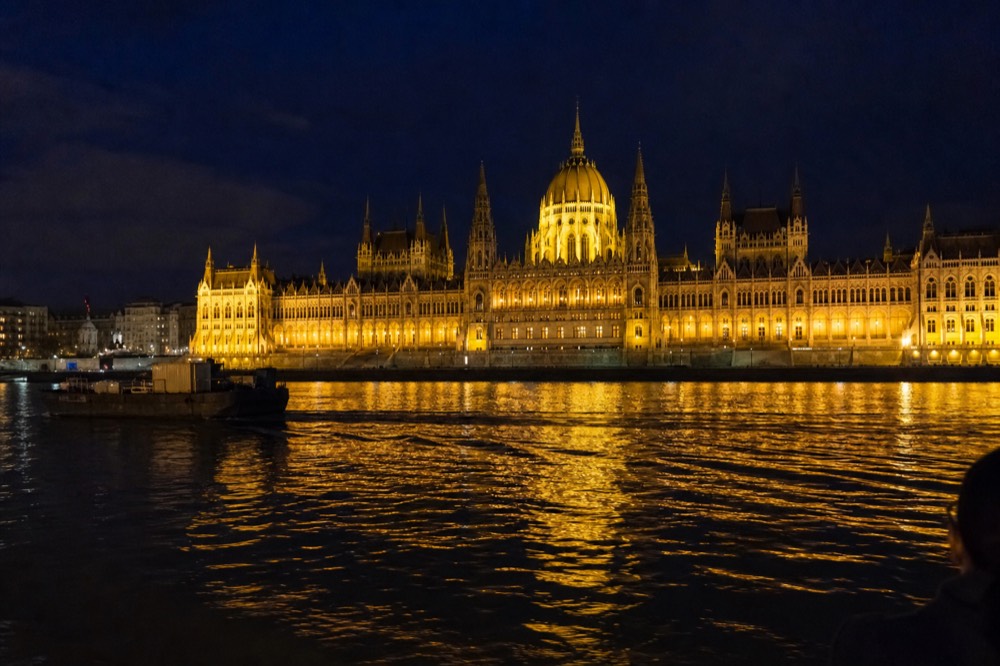
The core loop passes the Hungarian Parliament Building, Buda Castle and the Fisherman's Bastion, the Citadella on Gellért Hill, the Liberty Bridge, the Shoes on the Danube Bank memorial and Margaret Island, all from a riverbank panorama that UNESCO inscribed as a World Heritage Site in 1987. Night departures add the illuminated Parliament, castle and bridges.
The Parliament is the headline. Designed by Imre Steindl in Gothic Revival style and built between 1885 and 1904, it sits directly on the Pest embankment, and its extensive illumination system makes it the single most photographed object on a night cruise. On the opposite bank, the Fisherman's Bastion's seven Neo-Romanesque towers, designed by Frigyes Schulek between 1895 and 1902, represent the seven Magyar tribes that settled the Carpathian Basin.
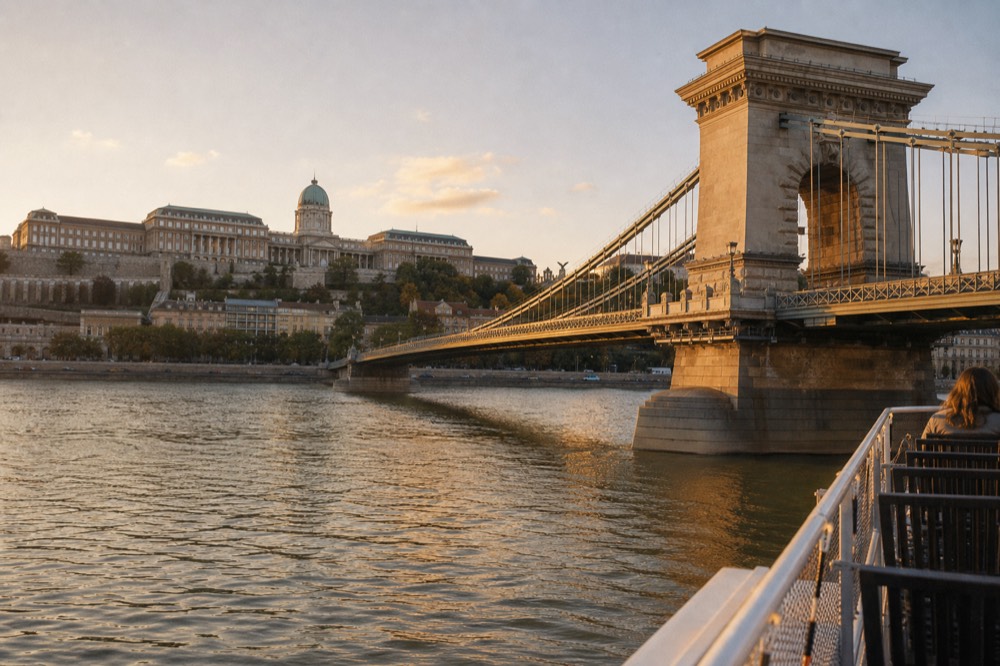
The bridges carry their own history. The Chain Bridge, the first permanent crossing between Buda and Pest, opened on November 20, 1849, designed by English engineer William Tierney Clark and built under the supervision of Scottish engineer Adam Clark, an account documented in detail at the Széchenyi Chain Bridge entry. The bottle-green Liberty Bridge opened in 1896 as the Franz Joseph Bridge, and the Citadella above it was built between 1850 and 1854 as a fortress designed to hold up to 60 cannons. The full listing of the Danube banks' World Heritage status covers the panorama the boats sail through.
Two quieter moments matter as much as the postcard sights. The Shoes on the Danube Bank memorial, installed on April 16, 2005, is sixty pairs of cast-iron period shoes on the Pest embankment, commemorating victims shot into the river by Arrow Cross militiamen in 1944-45. Cruises pass it slowly, and most narrations pause for it. Further north, Margaret Island sits between Margaret Bridge and Árpád Bridge, with its parks and music fountain visible from the water. If your cruise route includes the island loop rather than turning at the Chain Bridge, you are getting the longer and better circuit.
Which Budapest cruise format is worth it for you?
Pick basic sightseeing if the view is the whole point and the budget is tight, the drinks cruise if you are a group or want the most social hour on the water, and a dinner cruise if you want the lit-up riverfront to double as your evening's meal and entertainment. All three formats deliver the same core panorama; the difference is what surrounds it.
The sightseeing format is the pure test of the worth-it question. From $22 in the historical price snapshot (checked September 2026), with the current official sightseeing duration listed as 90 minutes, you get the river, the bridges and the Parliament, with nothing else to dilute or inflate the price. If a first-time visitor asks which single cruise to book and mentions no occasion, this is the default answer, and the historic Gróf Széchenyi ship adds a vessel worth seeing in its own right.
The drinks format is the group answer. Unlimited prosecco, beer, Aperol and limoncello spritzes for 75 minutes from $29 (checked September 2026) combines drinks with the river view. Whether it saves money depends on your current quote and what your group would otherwise order. The 48,175 reviews on file are the market's verdict on that trade.
The dinner format is the occasion answer, and it is the one to book when the cruise is the evening rather than a stop within it. A 4.7 rating across 7,557 reviews (checked September 2026) on the leading listing, plus a 4.7 across 1,979 on the candlelit variant, says the format reliably delivers dinner, live music and the illuminated riverfront as a package. The trade is money and time, roughly 90 minutes to 2 hours 30 minutes, against not having to plan anything else.
Whichever format fits, the practical details are the same: boats leave from numbered docks along Jane Haining rakpart, Vigadó tér and Batthyány tér depending on the operator, and the boarding locations guide maps them. Arrive 15 to 20 minutes early, because the schedule is fixed and the river does not wait.
These three cover the spread of budgets and formats, and all three carry the review depth discussed above.
Yes, for most visitors: sightseeing cruises start from $22, the drinks cruise from $29, and the leading dinner cruise holds a 4.7 rating across 7,557 reviews (all checked September 2026), with access requirements checked against the specific boat and departure.
Common questions about whether a river cruise in Budapest is worth it
Is a Danube River cruise in Budapest worth it?
For most visitors, yes. Sightseeing cruises start from $22 per person, the unlimited-drinks cruise from $29, and the most-reviewed dinner cruise holds a 4.7 rating across 7,557 reviews (all checked September 2026). Several featured boats do not accommodate wheelchairs, and these local sailings are not a multi-day cruise-line voyage. Check the individual product’s access information.
How long does a Budapest river cruise last?
Between about 50 minutes and 2 hours 30 minutes depending on the format. Night sightseeing runs about 50 minutes, basic sightseeing about an hour, the prosecco cruise 75 minutes, the main dinner cruise about 90 minutes, and the candlelit dinner cruise 2 hours 30 minutes (all checked September 2026).
Do Budapest river cruises run in winter?
Yes. Sightseeing cruises run year-round, with heated indoor cabin areas for winter departures, and the Danube in Budapest rarely freezes solid enough to halt operations.
Are Budapest river cruises wheelchair accessible?
Several featured listings state they are not wheelchair accessible. Access varies by vessel and departure; confirm the exact boarding arrangements with the operator before booking.
What is the cheapest Budapest river cruise?
The Official Sightseeing Cruise on the Danube aboard the historic Gróf Széchenyi ship, from $22 per person in the historical snapshot, with a current listed duration of 90 minutes (checked September 2026). The unlimited prosecco cruise is the next step up at from $29 per person (checked September 2026).
Editorial starting point; no preferences entered
Budapest Paddle Steamer Danube Cruise with Tokaj & Audio Guide
If the river view is what you came for, check Duna’s one-hour cruise date before adding a larger dinner or drinks package. Use your own quotes below to compare the value.
One hour, Duna Dock 10 on Pest. English audio via your own earphones, plus a Tokaj Frizzante or orange juice. No meal. Not wheelchair accessible.
Compare Options And Tailor This Choice
Start with what you know. Travel time to the meeting point is extra unless transport is explicitly included.
Age And Access Requirements
Alcohol service is for adults. Children must travel with an adult. Ask the operator about individual access needs; a blank preference is not an access assessment.
English audio via your own earphones, plus a Tokaj Frizzante or orange juice
One hour, Duna Dock 10 on Pest. English audio via your own earphones, plus a Tokaj Frizzante or orange juice. No meal. Not wheelchair accessible.
Unlimited sparkling wine, beer, listed spritzers, lemonade and water; food extra
Standard cruise: 75 minutes. Unlimited sparkling wine, beer, listed spritzers, lemonade and water; food extra. Dock depends on your selected option. Under-18s need an adult and receive no alcohol. Confirm individual access needs before booking.
Four-course adult dinner, welcome drink and live music; children’s menu has three courses
2½ hours, Legenda Dock 7 on Pest. Four-course adult dinner, welcome drink and live music; children’s menu has three courses. Extra drinks cost more. No vegan menu. Not wheelchair accessible.
Compare Your Actual Trip Costs
Use totals for the same party in one currency. Include travel to the meeting point, drinks and food in your independent total.
None of these experiences fits those choices. Adjust a filter or reset to see the starting options.
Published departure schedule. Seats and final price are confirmed on Viator.
We may earn a commission from affiliate bookings, at no extra cost to you. The provider confirms dates, final prices and options.